Pool Pressure Testing: How to Find Leaks in Swimming Pool Plumbing
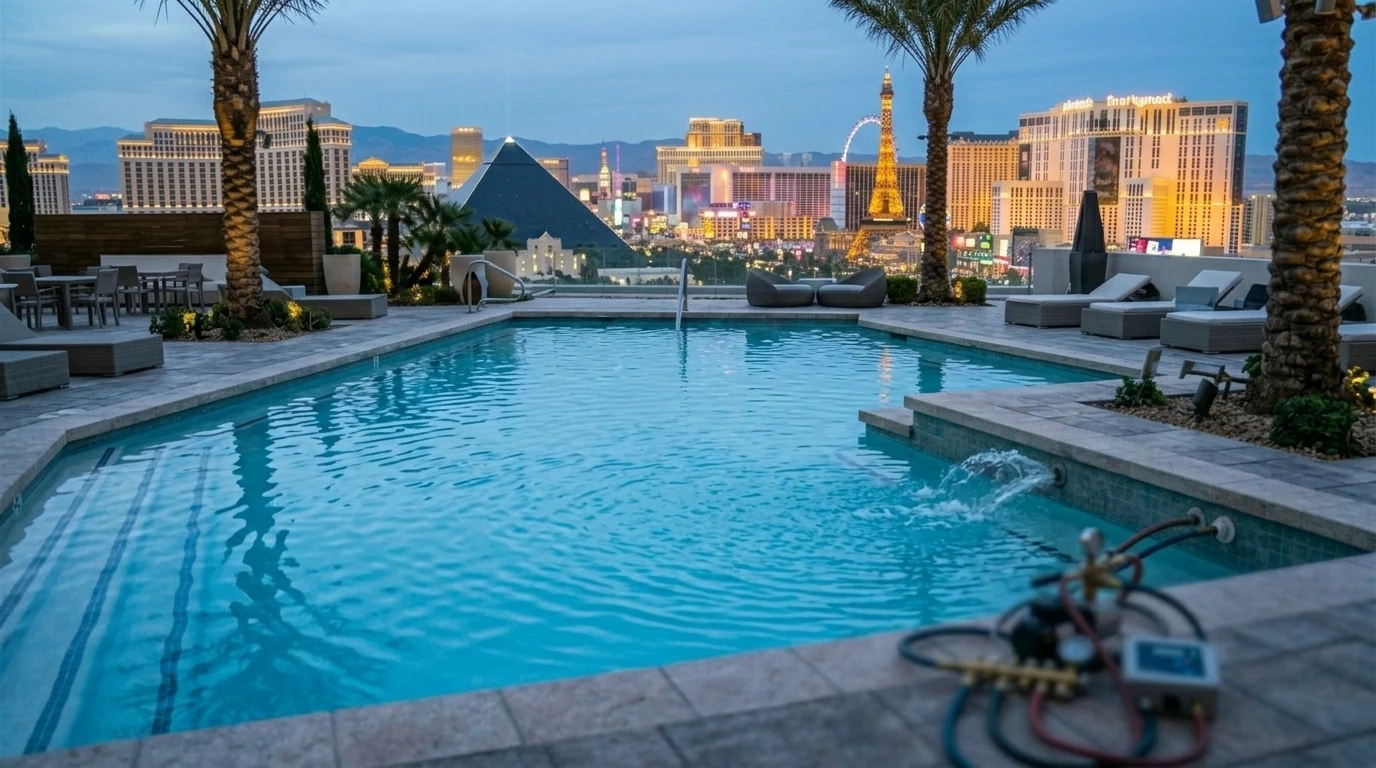


Is your water bill rising for no clear reason? A pressure test is the fastest way to find a leak in your swimming pool plumbing. Here in Las Vegas, the desert heat puts extra stress on PVC pipe joints and pool plumbing lines. That means even small cracks can turn into big water loss fast.
At Hound Dog Leak Detection, we use plumbing pressure testing every day to help pool owners across Henderson, Summerlin, and the entire Las Vegas Valley. In this guide, we break down what a pool pressure test is, how it works, and why it matters for your swimming pool.
A pressure test checks each plumbing line in your pool for leaks. Here is how it works in simple terms. We isolate each line — the skimmer line, return lines, main drain, and any line running to a pool cleaner or water feature. Then we plug each pipe using test plugs or expansion plugs at the equipment pad and at the pool side.
Once a line is sealed, we pressurize it with air or water. For air tests, we use a pressure tester with a pressure gauge to push air into the pipe and watch the pressure gauge. If the psi holds steady, the line is tight. If the psi drops, there is a leak in that pipe. It is that simple.
For some lines, we connect a garden hose and fill the pipe with water until the pressure reaches the target psi. Then we close the valve on the pressure tester and monitor for pressure loss. A pressure drop tells us a leak is hiding somewhere along that run.
Las Vegas sits in the Mojave Desert. Water is precious. A small plumbing leak can waste thousands of gallons each month and drive up your water bill. Worse, a leaking pipe under the pool deck or around the pool can erode soil and cause structural damage to your home.
Pressure testing helps us isolate the problem fast. Instead of guessing, we pinpoint the exact line that is failing. That saves you money on repairs because we only dig where we need to.
Common reasons Las Vegas homeowners call us for a pressure test include:
If your swimming pool shows any of these signs, you may have a potential leak in your plumbing system.
Not all leak detection companies carry the same tools. At Hound Dog Leak Detection, we bring professional-grade pressure testing equipment to every job. Our kits include Anderson Manufacturing pressure testing sticks and plugs, which are the industry standard. The Anderson Manufacturing Company builds some of the most trusted test plugs and pressure testing kits on the market.
Here is a look at common pressure testing equipment and how each piece works:
We also carry dye testing supplies. After a pressure test tells us which line has a leak, dye testing helps us pinpoint the exact spot. We release dye near the suspected area and watch where it gets pulled. This two-step leak detection process — pressure test first, then dye — gives us the most accurate results.
Every swimming pool is different, but our process stays the same. Here is what to expect when we test swimming pool plumbing at your Las Vegas home.
Step 1 — Map the plumbing system. We start at the equipment pad and trace every line back to the pool. This includes the skimmer, main drain, return lines, pool cleaner line, and any water features. We note every PVC pipe connection, valve, and fitting.
Step 2 — Plug each line. We insert test plugs or expansion plugs at each opening. On the pool side, we plug the skimmer throat, return fittings, and main drain. At the equipment pad, we close off each line at the pump and filter connections.
Step 3 — Pressurize and hold. We attach our pressure testing stick and pressure gauge to the first line. Then we pressurize it to about 20 psi using air or water. We close the valve on the pressure tester and wait. If the psi holds, the line is clear. If it drops, we know that pipe has a leak.
Step 4 — Test every line. We repeat the process for each plumbing line. We test the suction side or pressure side individually so we can isolate which run is leaking. This tells us if the problem is between the pool and the pump, or between the pump and the return jets.
Step 5 — Pinpoint the leak. Once we know which line fails, we use dye testing and listening gear to find the exact break. This is where our experience around the pool and under the pool deck makes a difference.
Step 6 — Report and recommend. We walk you through our findings and give you repair options. If the leaking pipe runs under concrete, we may suggest a reroute above ground. If it is a simple joint failure, a quick fix at the PVC pipe connection may be all you need.
Some pool owners ask if they can build your own pressure testing setup at home. You can find pressure testing kits from Anderson Manufacturing at pool supply stores. A basic kit comes with a pressure testing stick, a pressure gauge, and a few test plugs.
However, testing swimming pool plumbing lines takes more than just the gear. You need to know which lines run where, how to safely pressurize PVC pipe without cracking it, and how to read the results. Over-pressurizing a line can blow out fittings or crack old swimming pool pipes.
We always recommend calling a pro for plumbing pressure testing. A trained leak detection team can pressure test pool lines, read the data, and move right into pinpointing and repair — all in one visit.
A pressure test focuses on the plumbing lines only. It tells us if the pool pipes, fittings, or connections have a leak. But a swimming pool can also leak through the shell, tile line, light fittings, or skimmer body.
That is why we often pair pressure testing with a full swimming pool leak detection service. Our complete leak detection process checks the entire pool — plumbing, shell, and every fitting. We use listening devices, dye testing, and pressure testing equipment together to cover every possible source.
<table> <thead> <tr> <th>Service</th> <th>What It Checks</th> <th>Best For</th> </tr> </thead> <tbody> <tr> <td>Pool Pressure Testing</td> <td>Plumbing lines, PVC pipes, fittings at equipment pad</td> <td>Suspected plumbing leak or air in the system</td> </tr> <tr> <td>Swimming Pool Leak Detection</td> <td>Entire pool — shell, plumbing, skimmer, lights, fittings</td> <td>Unknown source of water loss</td> </tr> </tbody> </table>
If you know the leak is in the plumbing — for instance, you see a pressure drop on your pump gauge or wet soil near the pool deck — a pressure test alone may be all you need. If your water level keeps dropping and you are not sure why, a full pool leak inspection gives you the complete picture.
Not every drop in water level means a pool leak. Las Vegas summer heat can cause up to a quarter inch of water loss per day from normal evaporation. But if you are losing more than that, a plumbing leak is likely.
Watch for these signs:
If any of these sound like your pool, do not wait. A small plumbing leak can grow fast, especially in the sandy soil around Las Vegas residential swimming pools.
Hound Dog Leak Detection is a family-owned business run by Las Vegas natives. We know the soil, the climate, and the way contractors build a pool here. Whether you need to pressure test pool lines in Summerlin, track down a pool leak in Henderson, or get a full swimming pool leak detection in North Las Vegas, we show up with the right tools and the skills to find your leak.
Our team carries more pressure testing equipment and leak detection gear than most companies in the valley. We test every line, check every fitting, and do not stop until we find the source. That thoroughness is why Las Vegas pool owners trust us with their homes.
A pool pressure test is the smartest first step when you suspect a leak in your swimming pool plumbing lines. It is fast, accurate, and can save you thousands in wasted water and repair costs.
Call Hound Dog Leak Detection today at (888) 365-5325 to schedule your pressure test. We serve Las Vegas, Henderson, Summerlin, North Las Vegas, Boulder City, Green Valley, Lake Las Vegas, and all surrounding areas in Southern Nevada.
Do not let a hidden leak drain your pool — or your wallet. Let us sniff it out.
April 15, 2026
