
Safety First
Blog
Discover valuable insights and expert advice on water leak detection services tailored to the unique needs of homeowners and businesses in the Las Vegas Valley.

When a swimming pool starts losing water, many homeowners immediately look for a crack in the pool shell. But the source may be somewhere else entirely. Pumps , filters, valves, fittings, and underground plumbing can all develop leaks. Some only lose water while the circulation system is running, and in Las Vegas , small amounts of water around an equipment pad can evaporate before an obvious puddle ever forms. That makes changes in equipment behavior especially important to notice.

Older pools can remain enjoyable and functional for decades, but age can introduce problems that are not always obvious from the surface. Plumbing connections can weaken. Seals can deteriorate. Equipment can develop small leaks. Cracks may form around structural penetrations, and older repairs can begin to fail. In Las Vegas , where heat, evaporation, and constant circulation already place stress on pool systems, those age-related issues can make leak detection more complicated. Knowing what to watch for can help homeowners recognize when normal aging has turned into actual water loss.
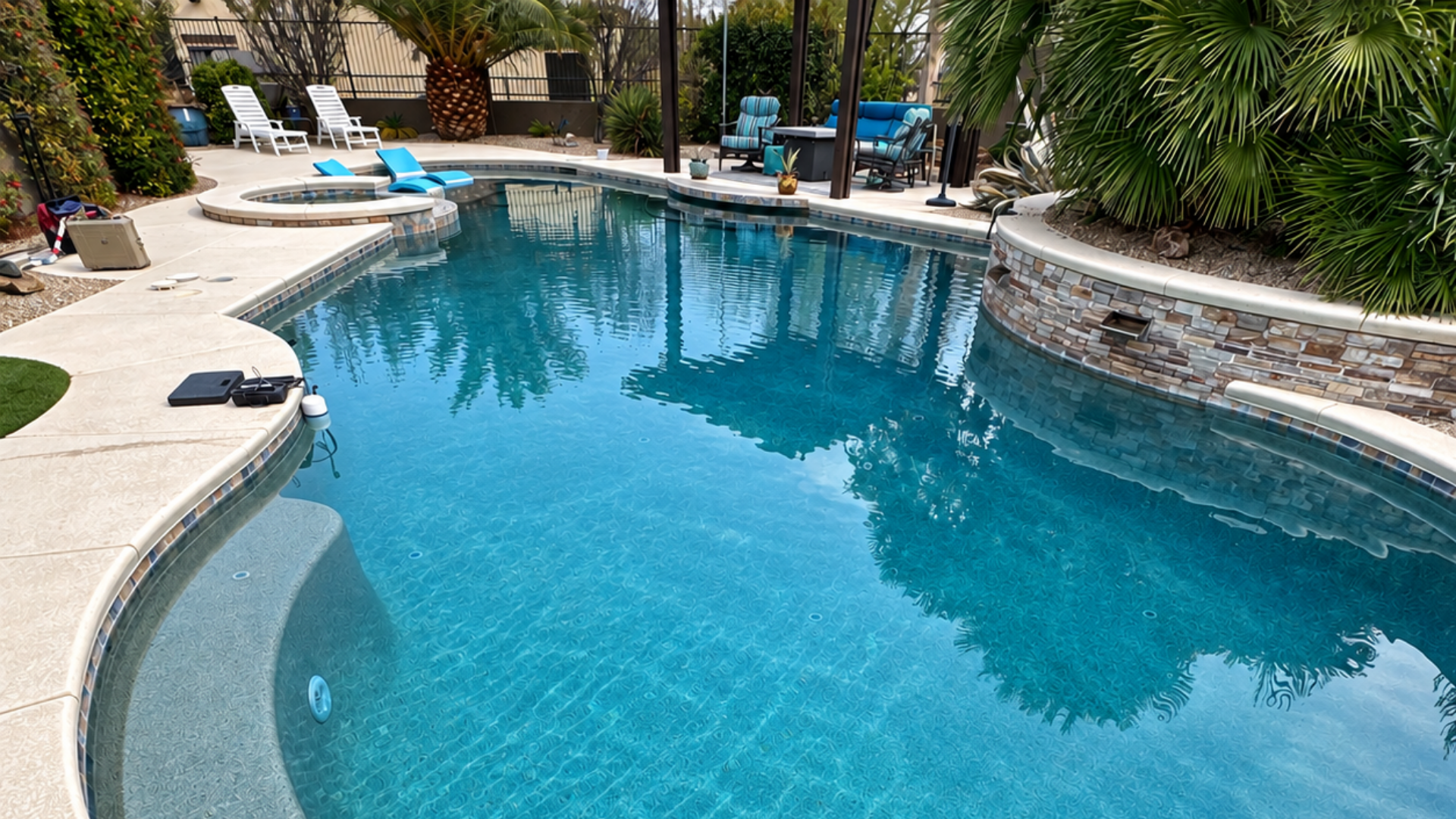
If you keep adding water to your pool only to watch the level drop again, it is easy to blame evaporation. In Las Vegas, evaporation can be significant , especially during hot, dry, windy weather. But when the water level repeatedly falls faster than expected, there may be another cause. A leak can occur in the pool shell, plumbing, equipment, or attached spa. The key is recognizing when normal water loss has crossed into something that deserves professional testing.

Not every pool leak starts in the pool shell . Some of the hardest leaks to spot begin around the equipment pad, inside plumbing lines, or at components that only leak while the system is running. In Las Vegas, where water can evaporate quickly, a small equipment leak may disappear before it ever forms an obvious puddle. That makes it important to pay attention to changes in water level, pump performance, pressure, and equipment behavior.

A swimming pool is a major investment , and small maintenance problems can become expensive when they go unnoticed. In Las Vegas and throughout Southern Nevada, heat, evaporation, aging equipment, plumbing stress, and constant circulation all put pressure on pool systems. Regular maintenance cannot prevent every leak, but it can make it easier to catch warning signs before water loss becomes severe. Paying attention to water level, equipment condition, plumbing, and surface changes can help protect both the pool and the property around it.

A dropping pool water level can tempt homeowners to try a quick fix. Adding sealant, tightening a fitting, replacing a gasket, or patching a visible crack may seem like an easy way to solve the problem. Sometimes a simple repair does work. The difficulty is that the visible symptom is not always the true source of the leak. Pool systems contain plumbing lines, fittings, skimmers, drains, lights, equipment, and structural components that can all lose water in different ways. That is why DIY repairs often fail when the source has not been identified first.
