Swimming Pool Leak Detection in Las Vegas: Why Local Experience Matters
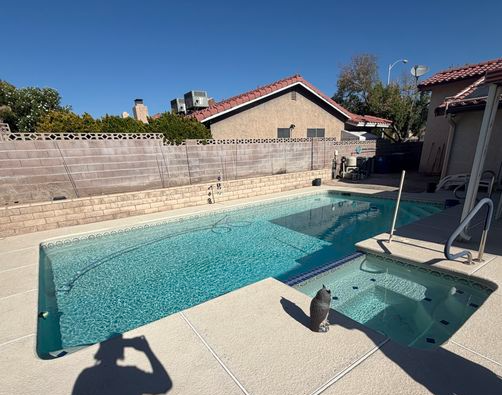
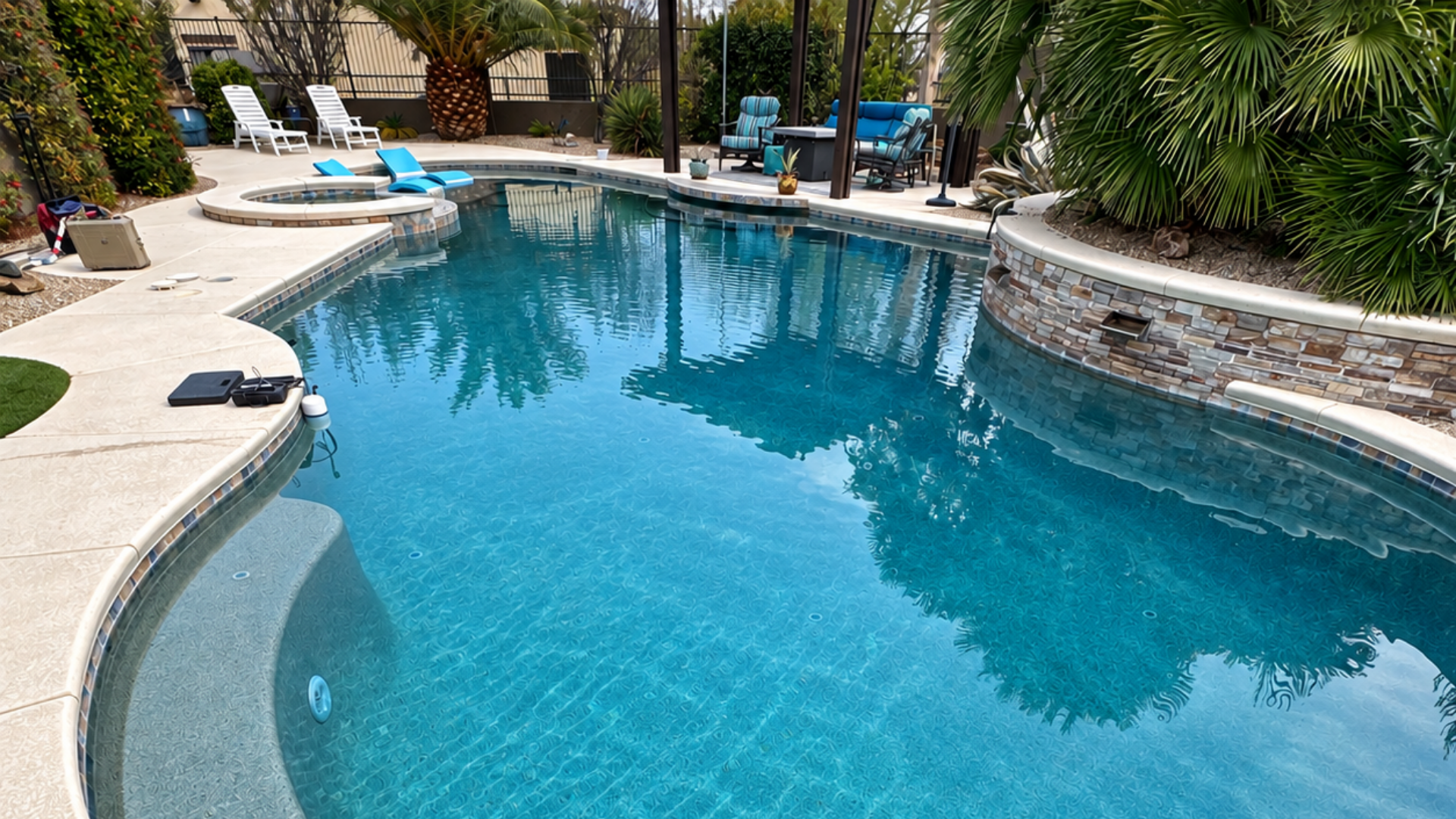
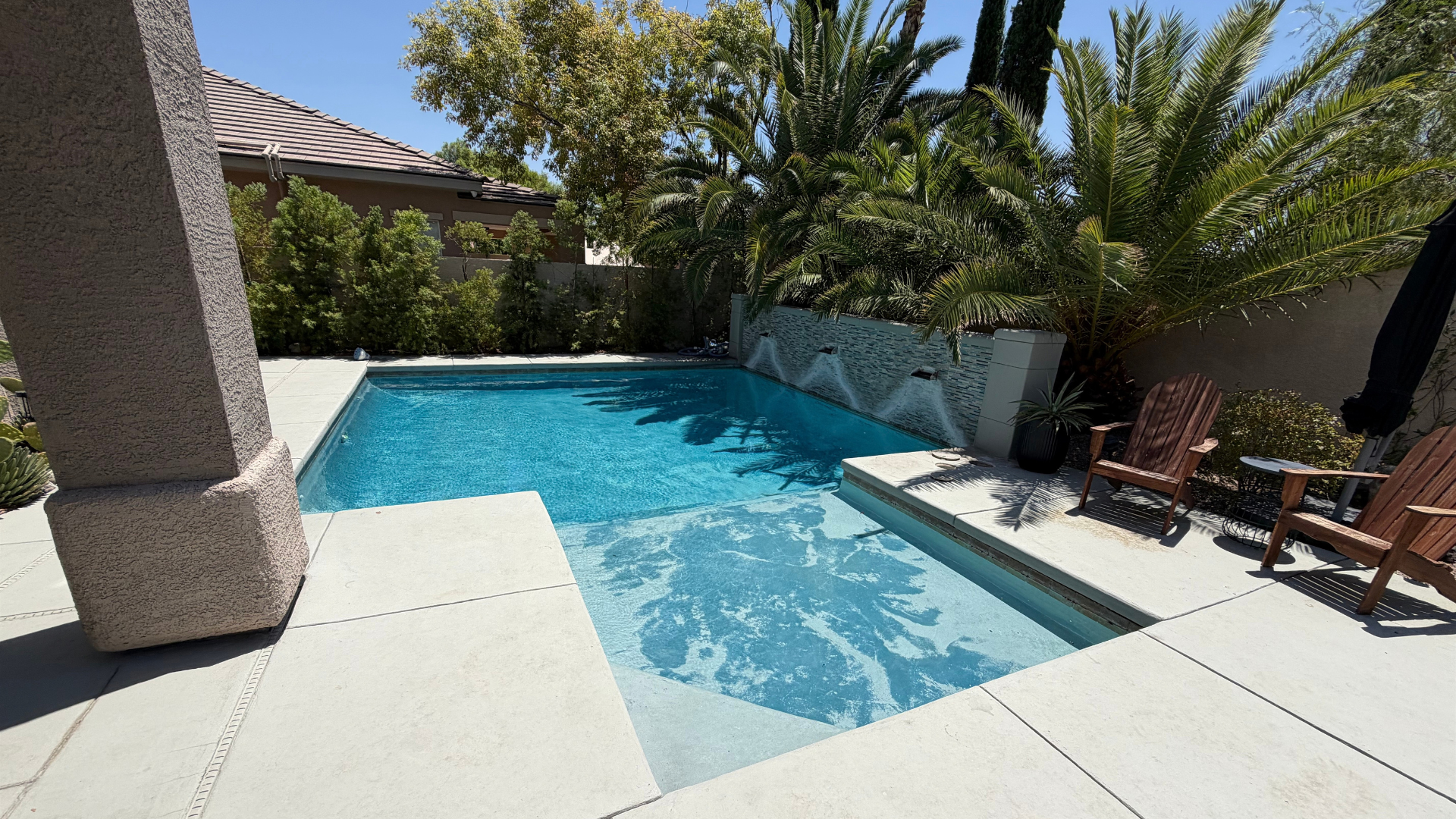
Pool water loss in Las Vegas can be difficult to interpret. High temperatures, low humidity, wind, heavy pool use, and normal evaporation can all cause the water level to drop. At the same time, an actual leak can quietly waste significant amounts of water if it is not identified.
That is why local experience matters. A leak detection specialist who understands Southern Nevada conditions is better positioned to separate normal environmental water loss from patterns that deserve further testing.

Las Vegas Pools Lose Water Naturally
Evaporation is a normal part of pool ownership, especially in a desert climate.
The Southern Nevada Water Authority has long identified evaporative water loss as an important consideration in regional pool water use. In fact, SNWA estimates that each square foot of pool surface area avoided saves roughly 48.6 gallons of water annually.
That does not mean every noticeable drop in water level is normal.
The challenge is knowing when evaporation ends and a leak begins.
A technician familiar with Las Vegas conditions understands that temperature, wind, pool size, exposure, and season all affect the rate of evaporation. That local context can help prevent a homeowner from mistaking ordinary water loss for a leak—or dismissing a real leak as “just the heat.”
Local Water Alerts Can Provide an Important Clue
Southern Nevada utilities increasingly use advanced metering systems to identify continuous water flow and unusually high consumption.
SNWA reports that Las Vegas Valley Water District and other local agencies use near-real-time meter data to help notify customers about suspected leaks. Slow leaks are not always visible, but they can still create substantial water loss over time.
If you receive a continuous-flow or high-water-use notification and your pool has also been requiring frequent refilling, the pool should be considered as one possible source.
It is still important not to assume. Irrigation systems, toilets, appliances, supply lines, and other plumbing can also leak.
Pool Construction Varies Across the Las Vegas Valley
Not every pool in Southern Nevada is built the same way.
Older pools may have aging plumbing, skimmers, fittings, structural joints, or equipment that have experienced years of heat and ground movement. Newer pools may include spas, water features, in-floor cleaning systems, multiple pumps, or more complex plumbing layouts.
That variety matters during leak detection.
A local specialist who regularly works with Las Vegas-area pools is more likely to recognize common construction patterns and understand where problems frequently develop.
Instead of guessing, the diagnostic process can be narrowed based on the design, age, and behavior of the individual pool.
Desert Conditions Can Complicate Diagnosis
The Las Vegas climate can make leak detection more challenging because water can disappear quickly.
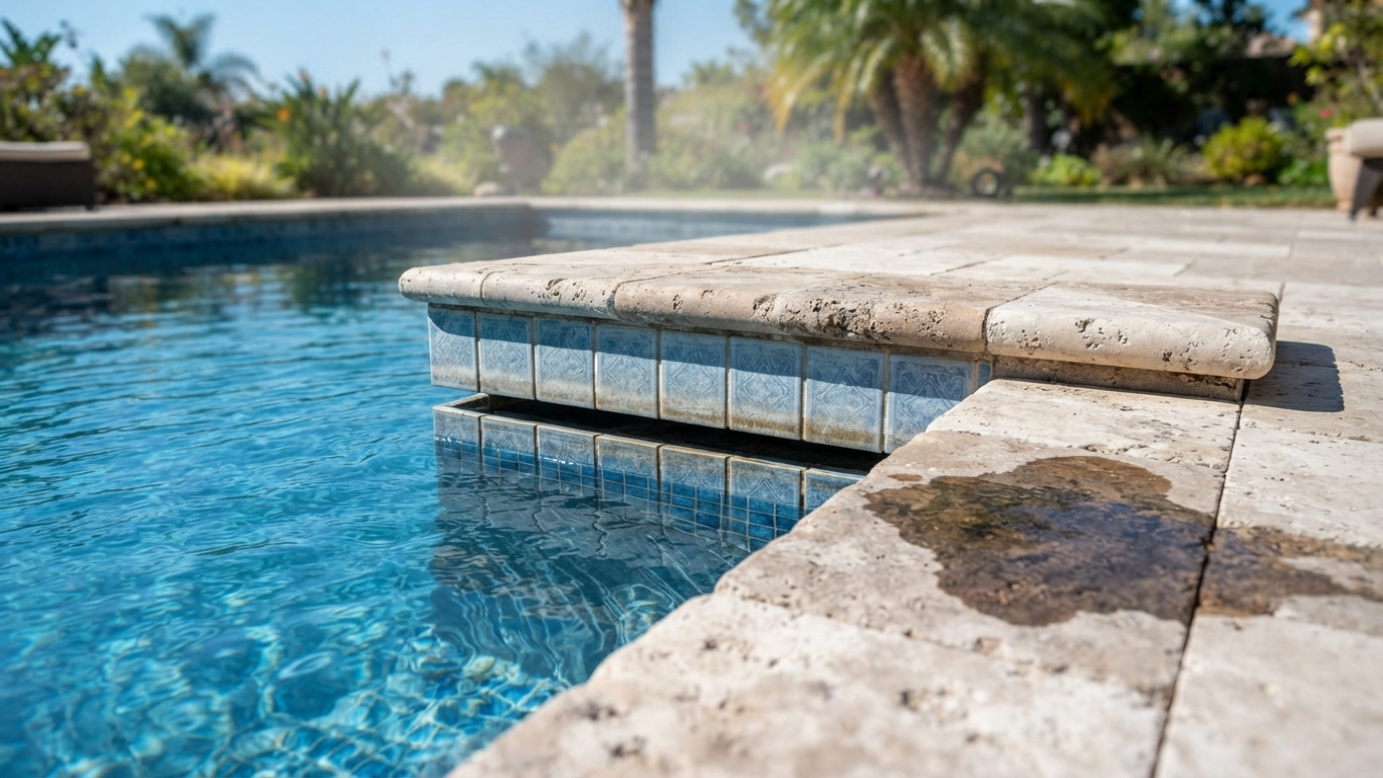
A small equipment leak may evaporate before forming an obvious puddle. Damp soil may dry rapidly. Wind can increase normal evaporation. A pool may also lose water differently depending on whether the circulation system is operating.
These conditions make measurement especially valuable.
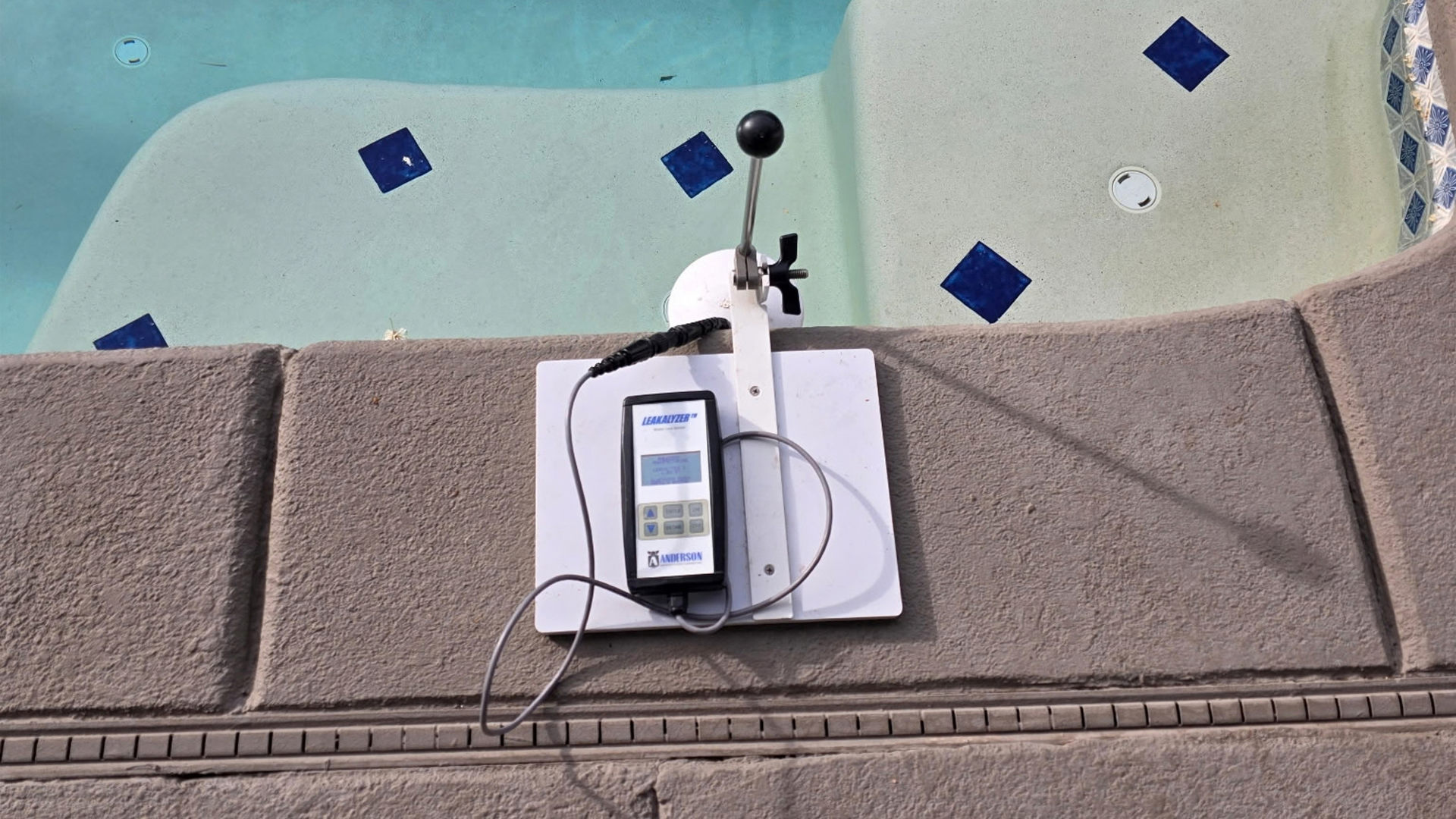
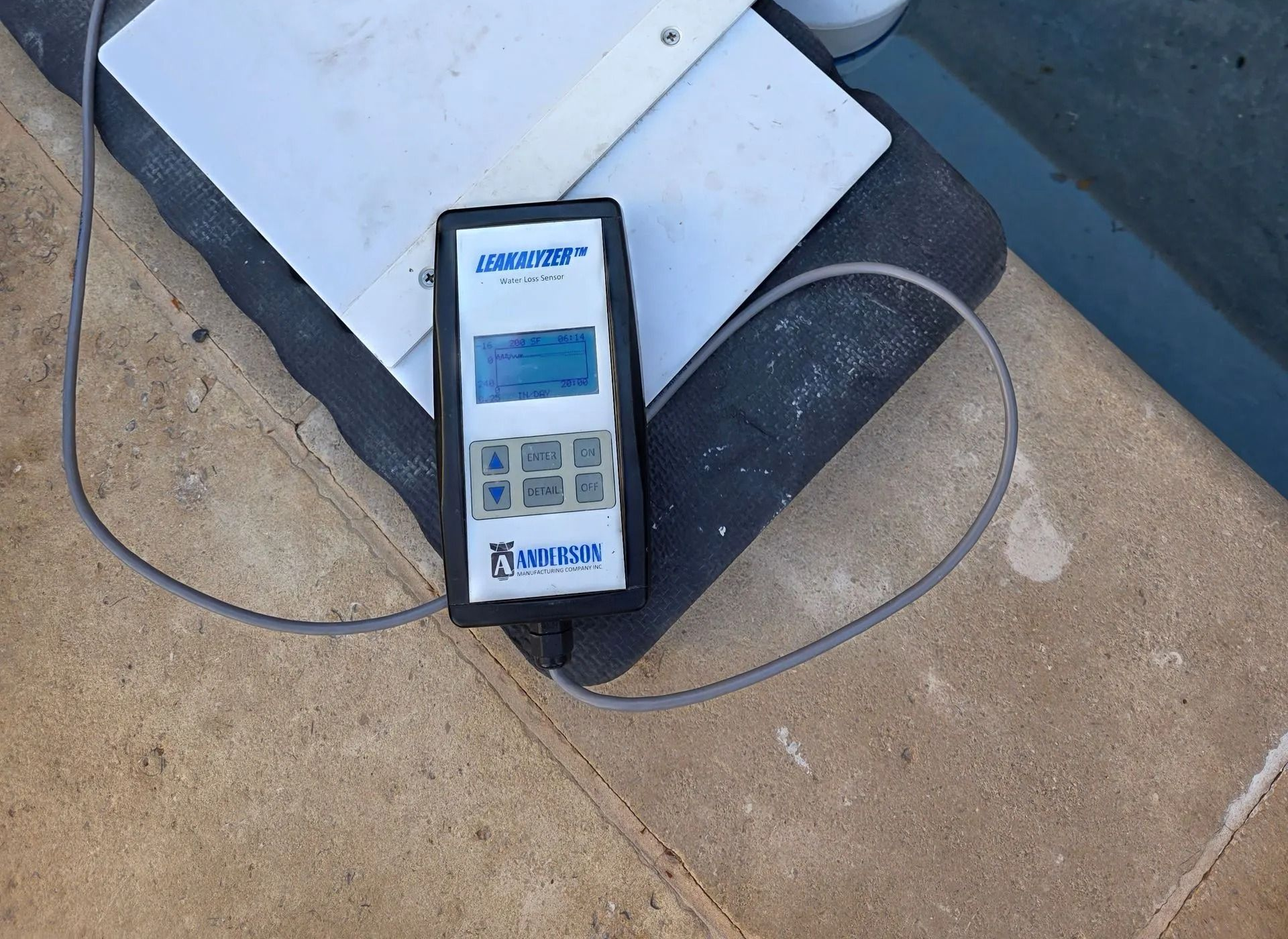
At Hound Dog Leak Detection LV, the Leakalyzer® Rapid Water Loss Sensor can be used to measure the rate of pool water loss in a short period of time. The tool produces real-time information that helps determine whether the pool is losing more water than expected from evaporation alone.
It does not pinpoint the leak by itself, but it provides useful evidence about what is happening before more targeted testing begins.
Isolation Testing Helps Narrow the Problem
Once abnormal water loss is confirmed, the next question is where it is coming from.
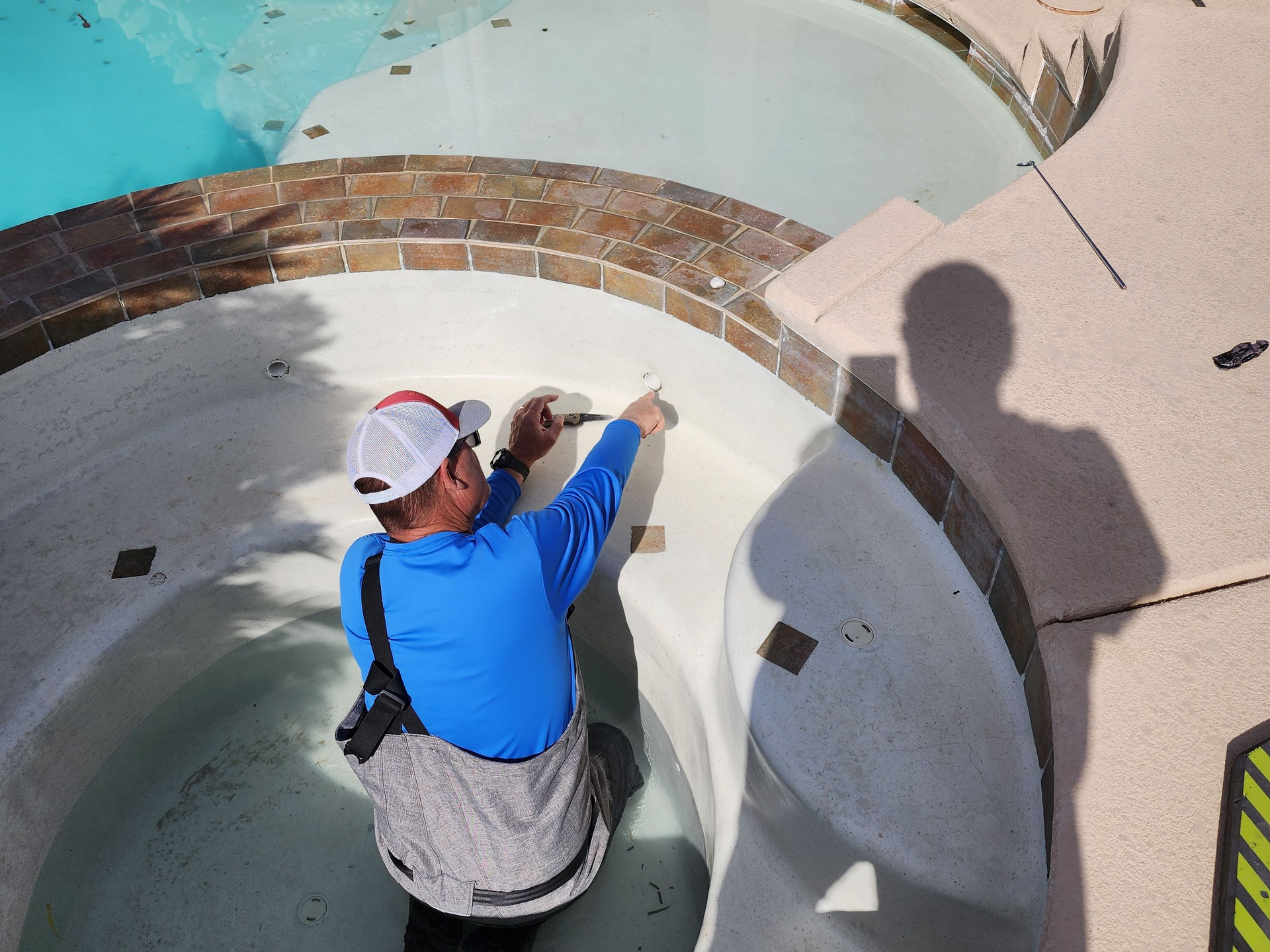
Hound Dog Leak Detection LV may use isolation testing to separate different parts of the pool system.
That can include distinguishing between:
- Plumbing lines
- Pool and spa bodies
- Water features
- Circulation systems
- Equipment-related areas
By testing different components independently, the technician can narrow the search and avoid unnecessary repairs.
This systematic approach is especially valuable in complex Las Vegas pools where several systems may be connected.
Dye Testing Can Help Pinpoint Suspected Areas
When a specific structural area or fitting becomes suspicious, dye testing may be used.
A small amount of dye placed near a suspected leak can show whether water is being drawn into a crack, fitting, skimmer, light niche, or other opening.
Dye testing works best when it is used as part of a broader diagnostic process rather than randomly checking every surface.
That is another reason experience matters: knowing where to test is just as important as knowing how to test.
Local Knowledge Can Save Time and Guesswork
Pool leaks are not always obvious, and the Las Vegas climate makes water loss especially easy to misinterpret.
A specialist who understands local evaporation, pool construction, equipment setups, water-use alerts, and common leak locations can approach the problem more efficiently.
Hound Dog Leak Detection LV combines local experience with tools such as the Leakalyzer®, isolation testing, and dye testing to determine whether a pool is truly leaking and where further investigation should focus.
If your pool water level keeps dropping, you are adding water more often than usual, or you receive a continuous-flow alert, contact Hound Dog Leak Detection LV for professional pool leak detection in Las Vegas. Local knowledge can make the difference between guessing at the problem and finding the actual source.