How to Tell If Your Pool Has a Leak: 10 Warning Signs Every Pool Owner Should Know
A sparkling swimming pool is one of the best parts of owning a home—until you notice the water level dropping faster than usual. While some water loss is normal due to evaporation, a hidden leak can waste thousands of gallons of water, increase your utility bills, damage your property, and lead to costly repairs if left untreated.
At Hound Dog Leak Detection, we've helped countless homeowners identify and repair pool leaks before they become major problems. Here are 10 warning signs that your pool may have a leak.
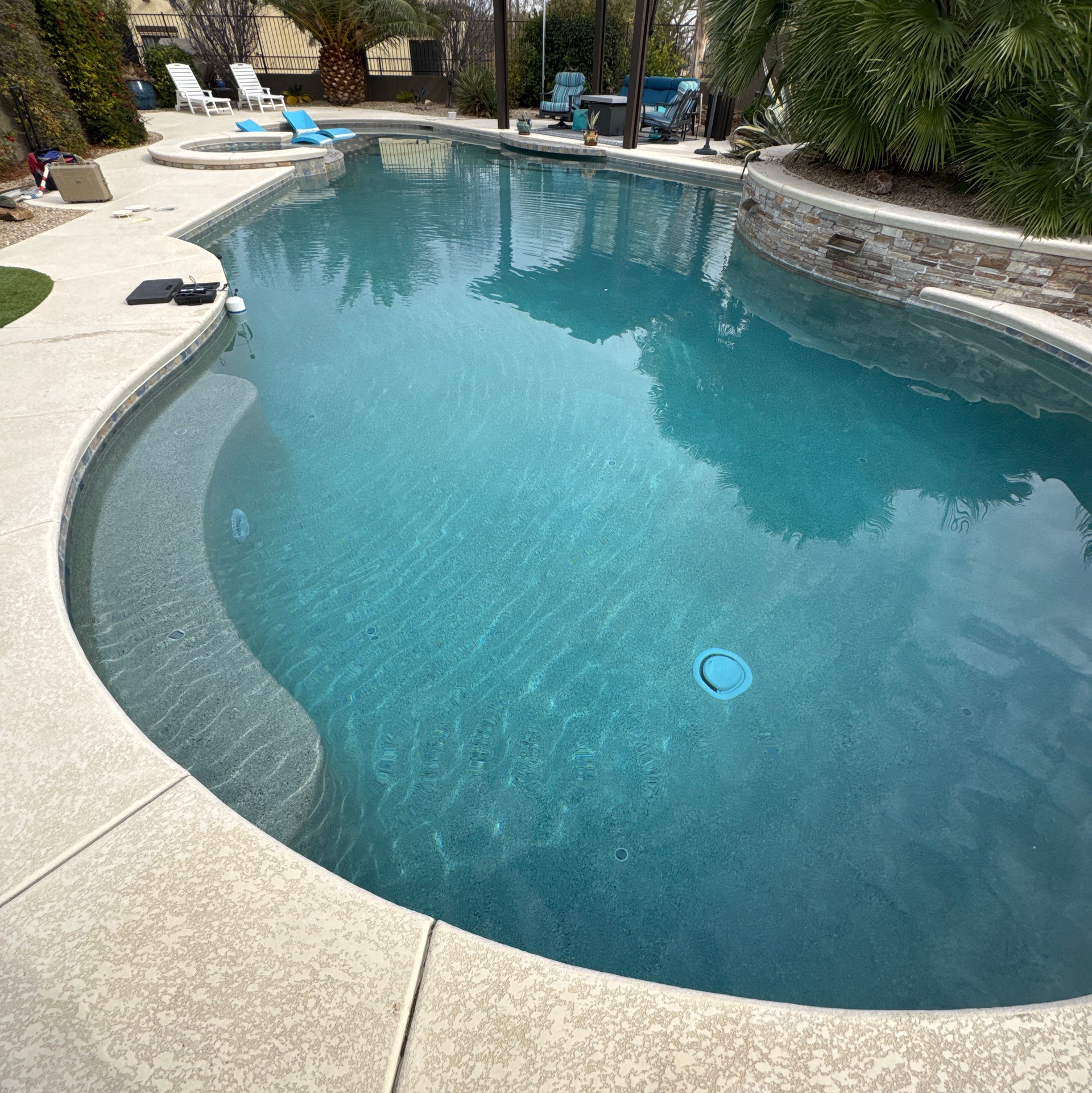
1. Your Pool Water Level Keeps Dropping
One of the most obvious signs is needing to refill your pool more often than usual.
Most pools lose about 1/4 to 1/2 inch of water per day from evaporation, depending on weather conditions. If you're consistently losing more than that, especially during mild weather, there's a good chance a leak is the culprit.
Tip: Try the bucket test to determine whether you're losing water from evaporation or a leak.
2. Your Water Bill Suddenly Increases
A hidden pool leak can waste hundreds—or even thousands—of gallons of water every month.
If your monthly water bill has increased without changes in household usage, your pool could be silently leaking.
3. You Notice Wet or Soggy Areas Around the Pool
Water escaping underground doesn't simply disappear.
Look for:
- Constantly damp soil
- Muddy patches
- Grass that's greener than surrounding areas
- Water pooling around the pool deck
These can all indicate water leaking beneath the surface.
4. Cracks Are Appearing in the Pool or Deck
Leaks can wash away soil beneath the pool, causing the ground to shift.
Over time, this may result in:
- Cracks in the pool shell
- Deck separation
- Uneven concrete
- Settling around the pool
Structural movement should never be ignored.
5. Air Is Coming Through Your Pool Returns
If you notice bubbles blowing into the pool from the return jets, it could indicate air entering the plumbing system through a leak.
This often points to a suction-side plumbing leak that should be professionally inspected.
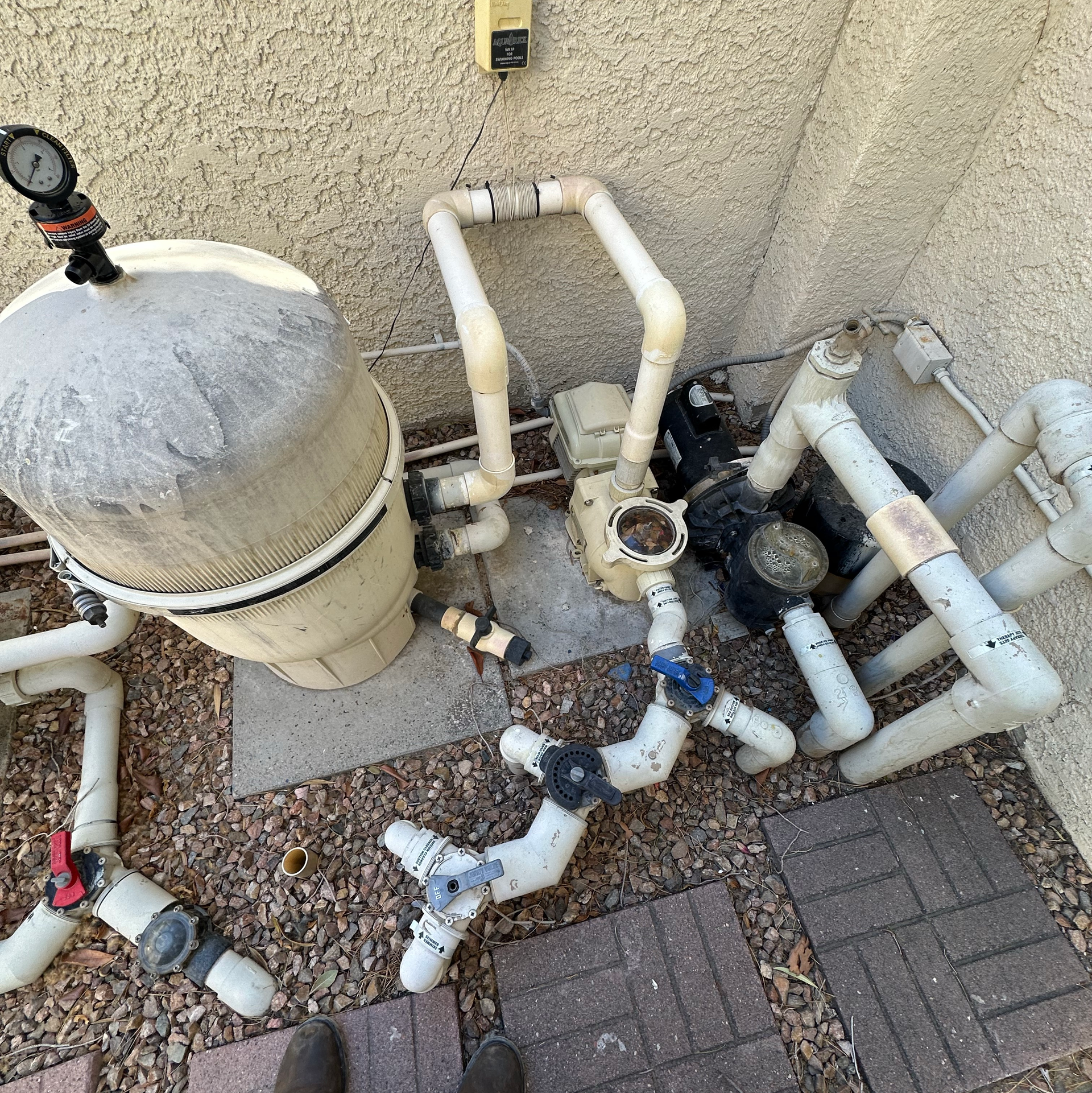
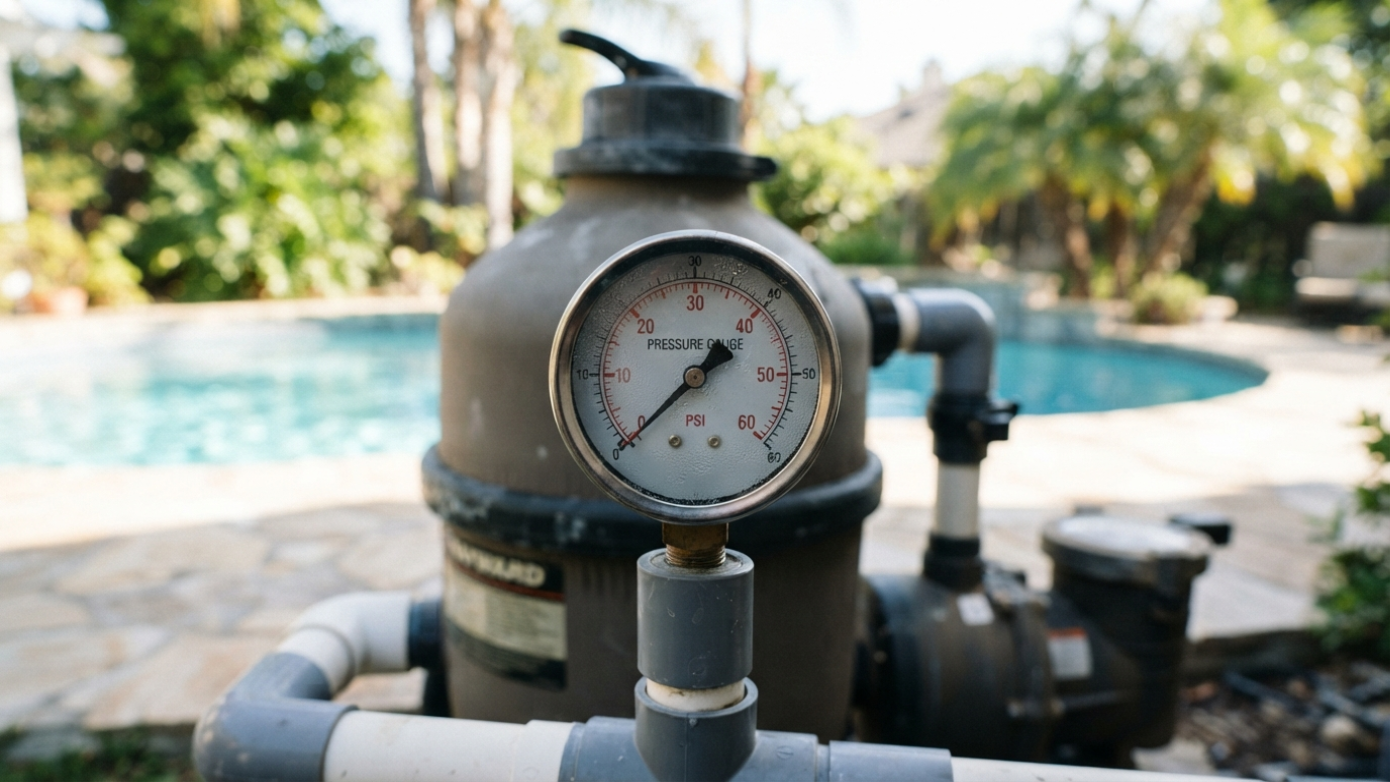
6. Your Pool Equipment Is Losing Prime
Your pool pump should maintain a steady flow of water.
Signs of a plumbing leak include:
- Pump losing prime
- Difficulty starting
- Air visible in the pump basket
- Reduced water circulation
These symptoms often indicate that air is entering the system somewhere underground or near the equipment pad.
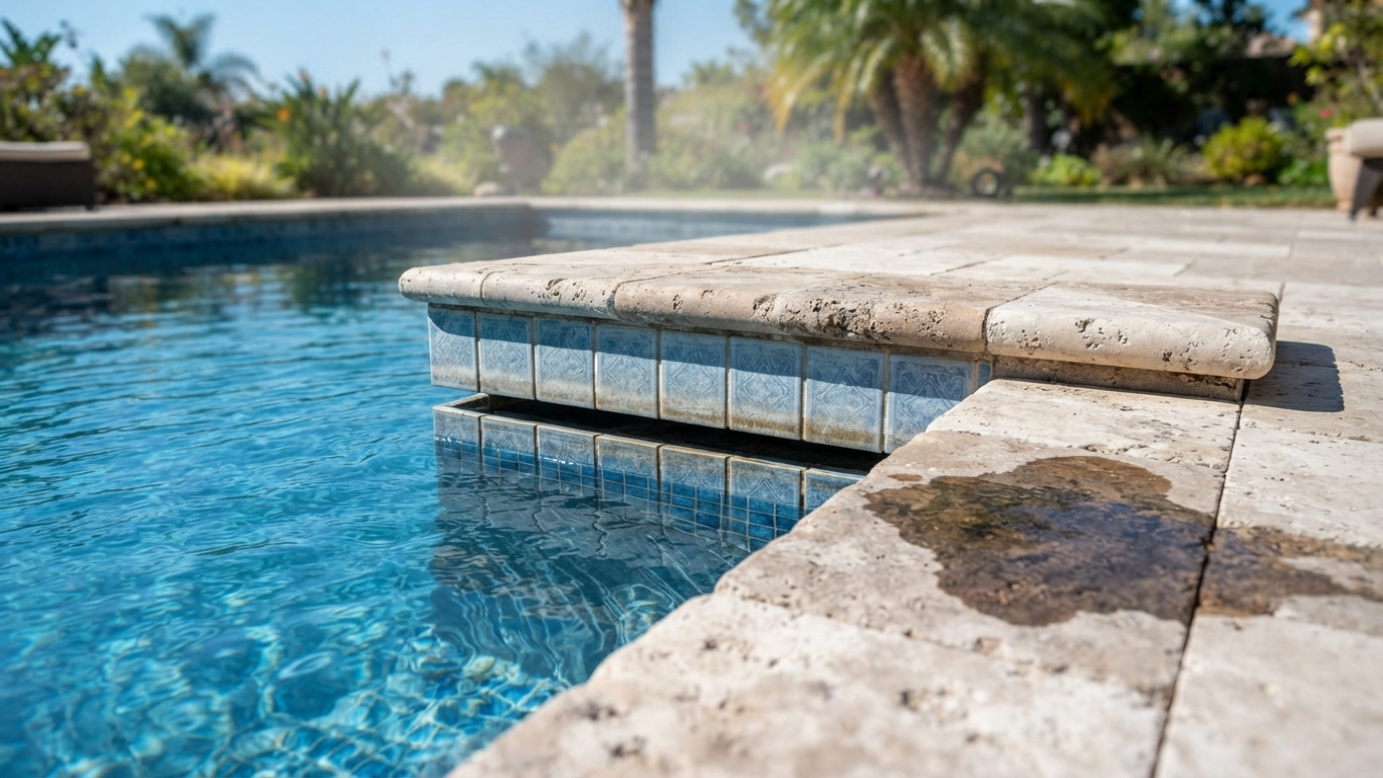
7. You See Cracks or Loose Tiles
Leaks commonly develop around:
- Tile lines
- Expansion joints
- Skimmers
- Pool lights
- Return fittings
If you notice loose tiles or visible cracks, water may be escaping through these areas.
8. You're Constantly Adding Chemicals
A leaking pool doesn't just lose water—it also loses chemicals.
If you're using more chlorine, pH adjusters, or other balancing chemicals than normal, a leak may be diluting your pool's chemistry.
Frequent chemical adjustments can become expensive over time.
9. Algae Keeps Coming Back
Poor water circulation caused by plumbing leaks can make it difficult to maintain balanced water chemistry.
If algae returns shortly after treatment despite proper maintenance, a hidden leak may be contributing to the problem.
10. The Leak Gets Worse Over Time
Small leaks rarely stay small.
What begins as a slow drip can gradually expand into a significant plumbing or structural issue, leading to:
- Soil erosion
- Foundation damage
- Deck movement
- Expensive repairs
The sooner a leak is detected, the less damage it typically causes.
How to Perform the Bucket Test
The bucket test is an easy way to determine whether your pool is leaking or simply experiencing normal evaporation.
Here's how:
- Fill a bucket with pool water until it's about three-quarters full.
- Place the bucket on the pool step so the water inside the bucket is level with the pool water outside.
- Mark both water levels.
- Wait 24 hours without using the pool.
- Compare the two water levels.
If the pool water has dropped significantly more than the water inside the bucket, you likely have a leak.
Why Professional Leak Detection Matters
Pool leaks aren't always visible.
Many occur:
- Underground plumbing lines
- Behind pool walls
- Around fittings
- Beneath concrete decking
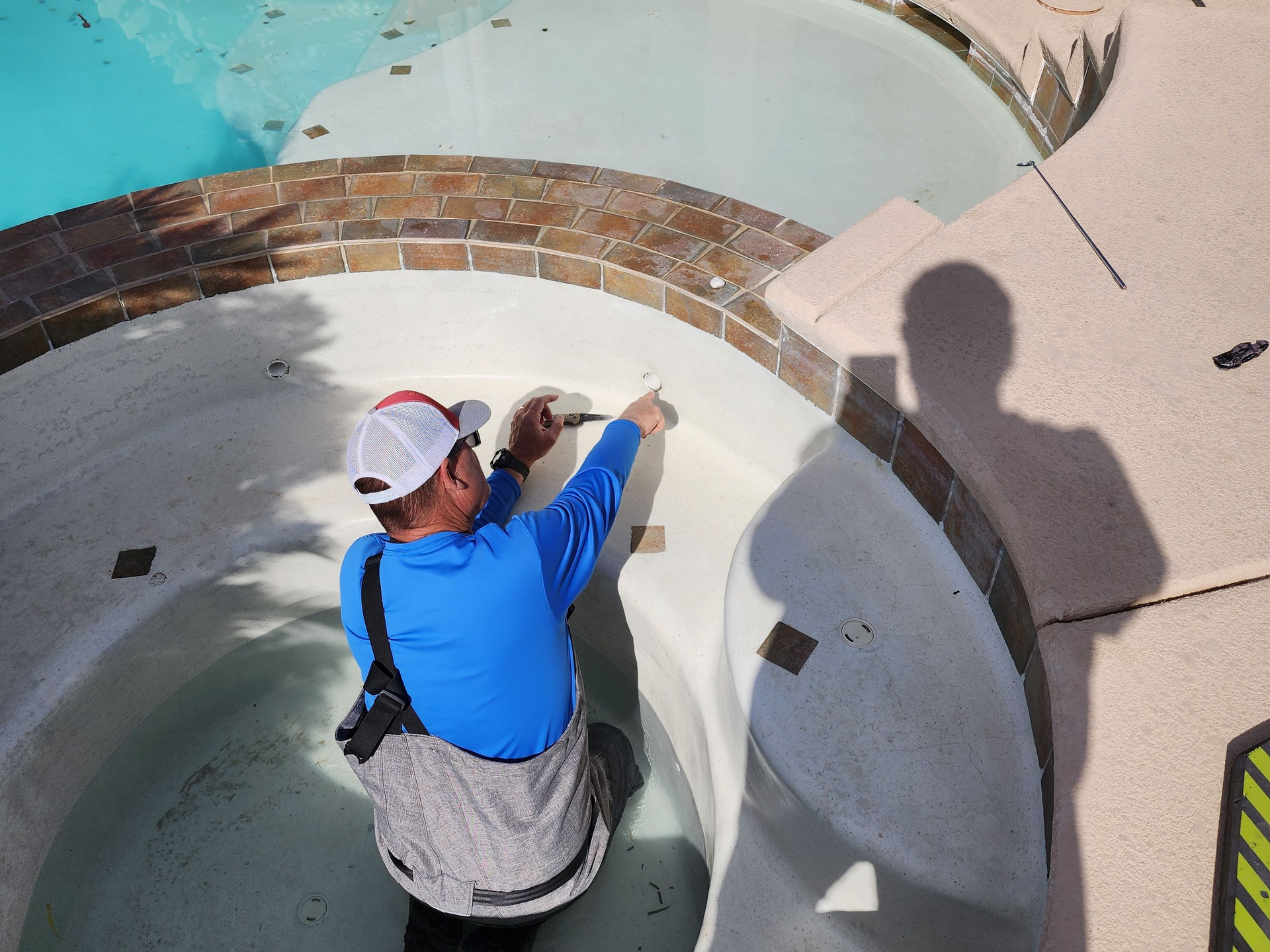
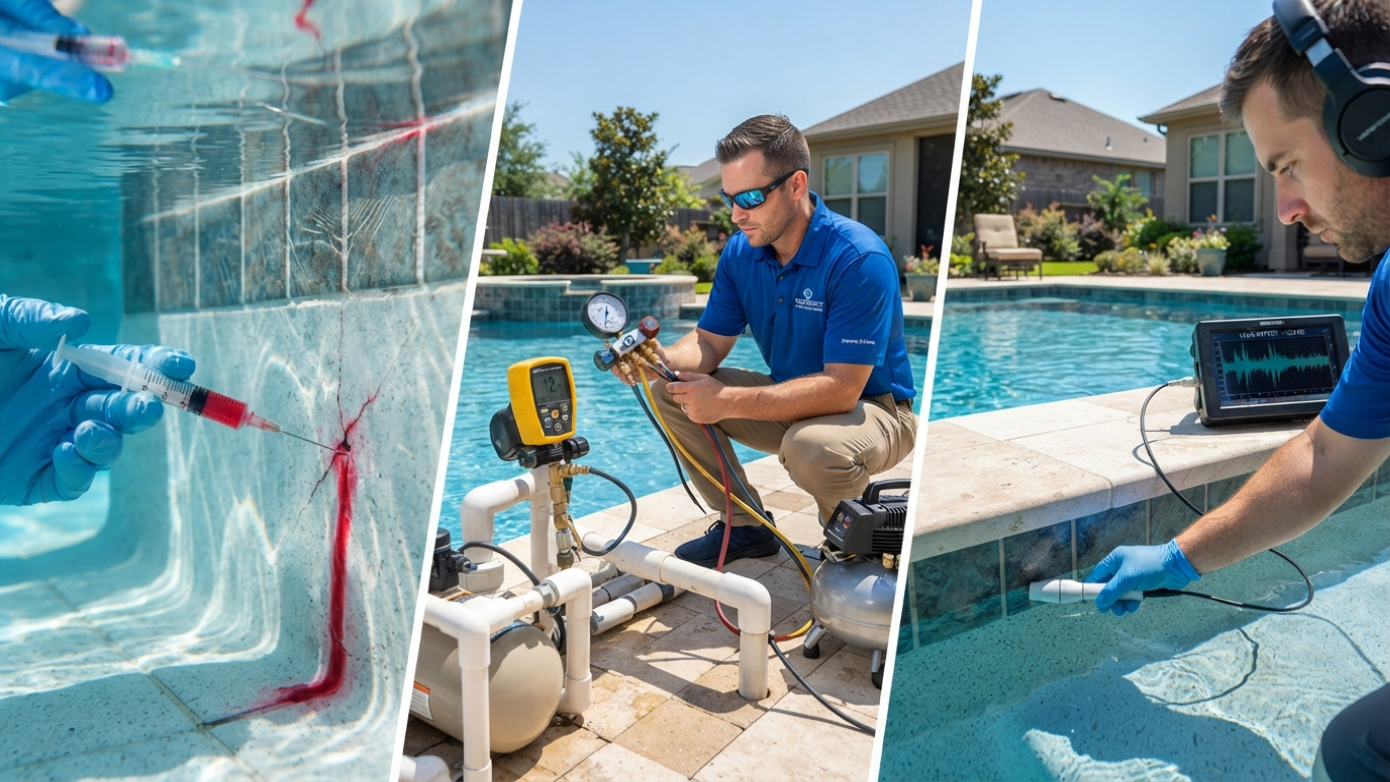
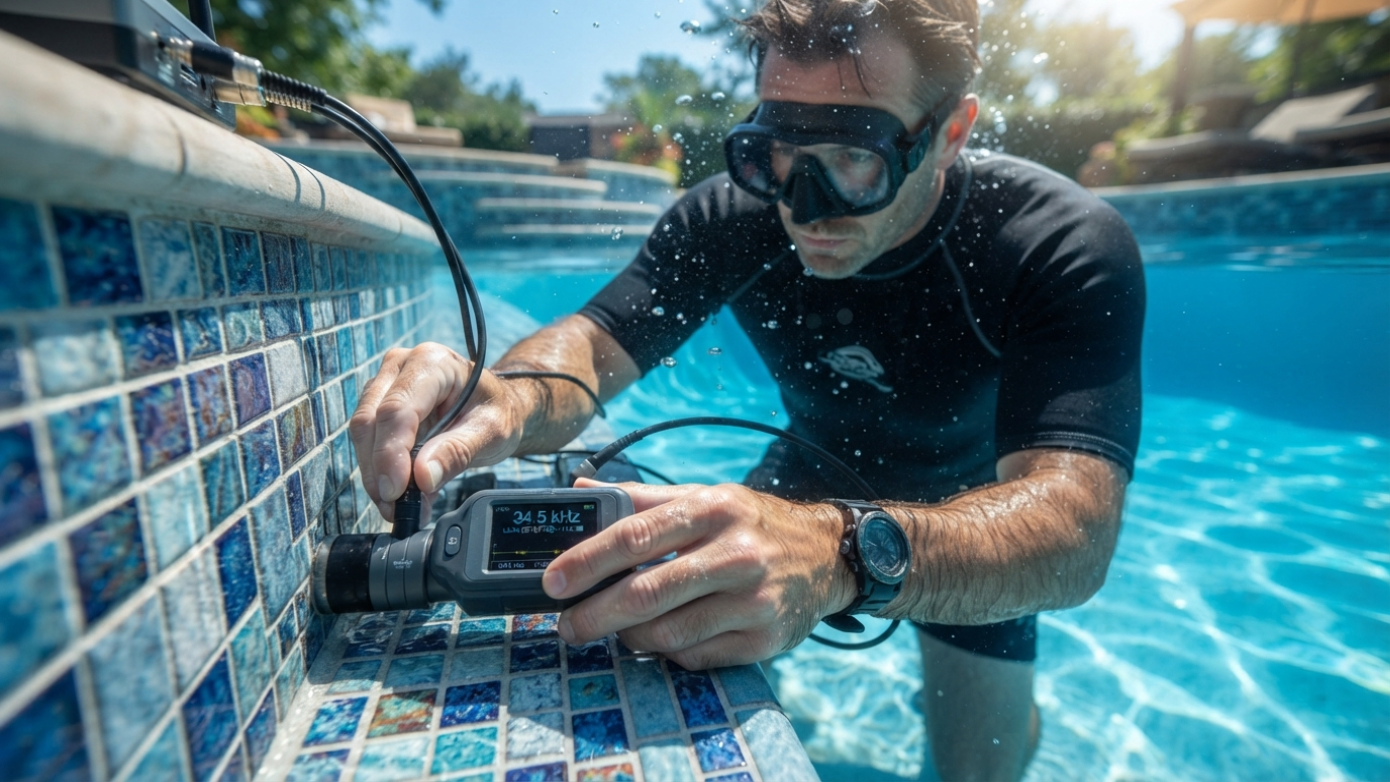
Professional leak detection specialists use advanced equipment such as:
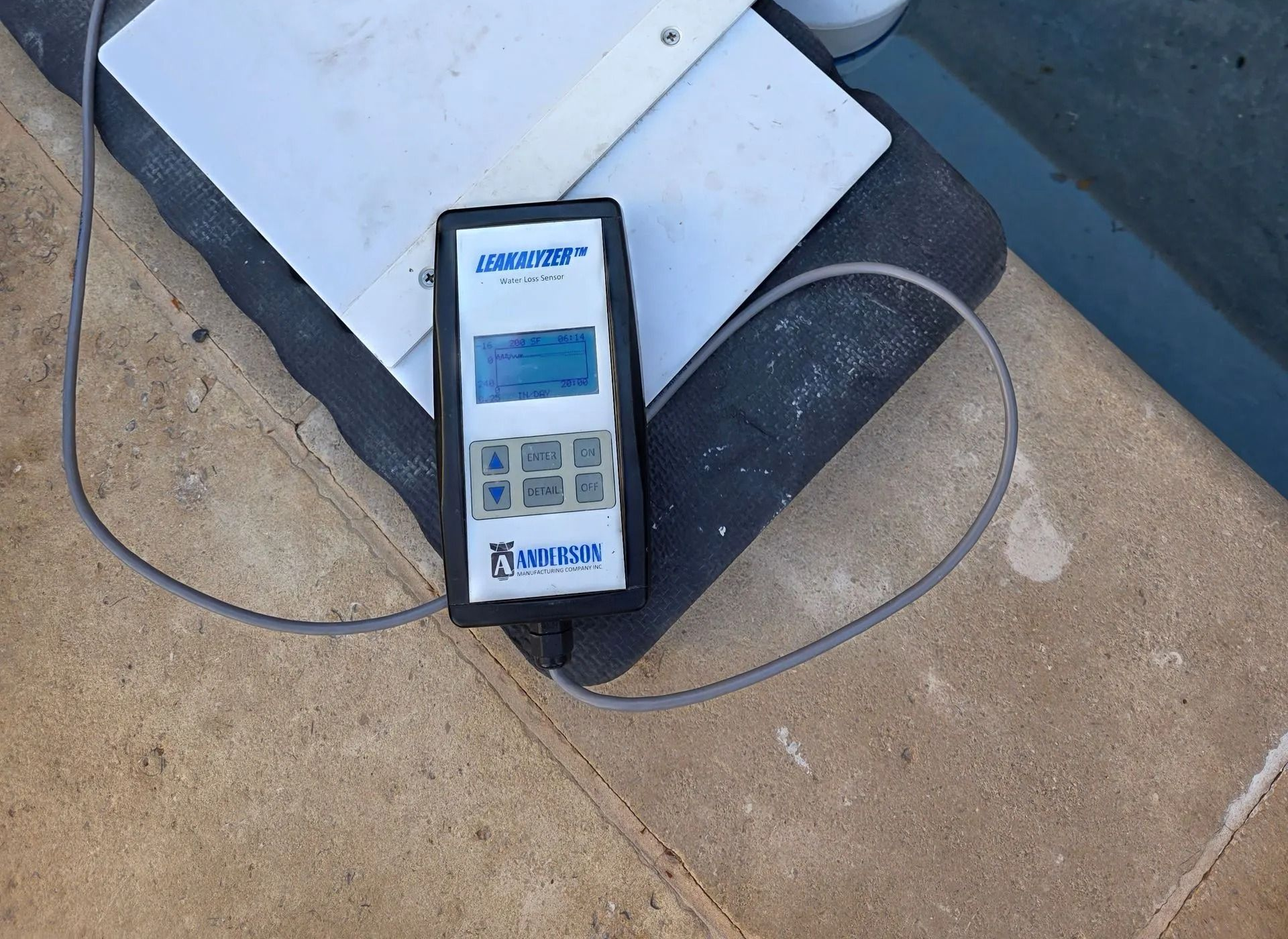
- Electronic leak detection
- Pressure testing
- Acoustic listening devices
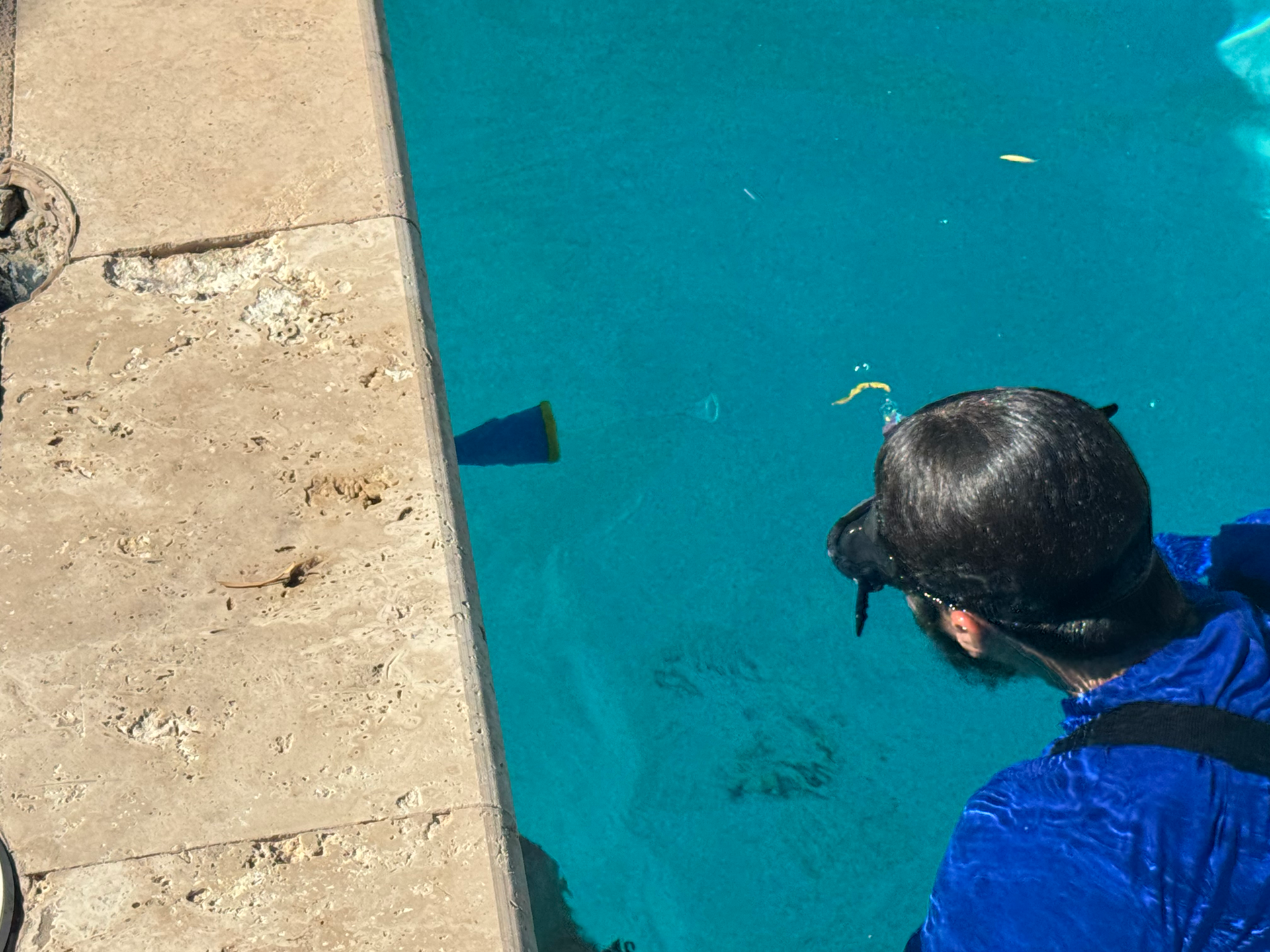
- Underwater dye testing
These methods accurately locate leaks while minimizing unnecessary digging or demolition.
Don't Wait Until a Small Leak Becomes a Big Problem
Ignoring a pool leak can lead to:
- Higher water bills
- Increased chemical costs
- Equipment damage
- Structural repairs
- Landscape erosion
If you've noticed one or more of these warning signs, it's worth having your pool professionally inspected before the problem worsens.