Pool Leak Inspection FAQs: What to Expect During a Professional Leak Detection Service
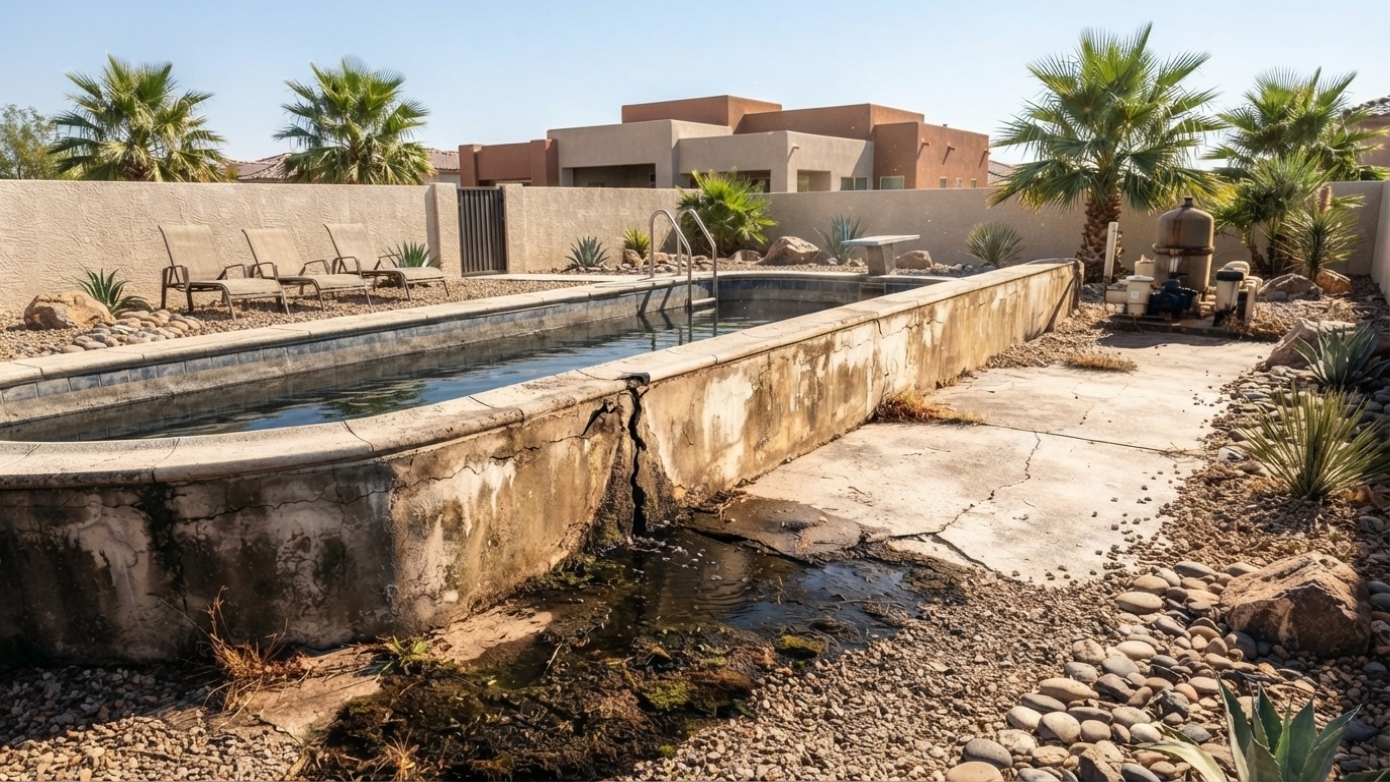
If your swimming pool seems to be losing more water than normal, you may be wondering whether evaporation is to blame or if you have an actual leak. While some water loss is expected, excessive water loss can lead to higher utility bills, damage to your pool or surrounding property, and unnecessary water waste—an especially important concern in Southern Nevada.
At Hound Dog Leak Detection, we use specialized equipment and proven diagnostic techniques to accurately identify the source of pool leaks. Here are answers to some of the questions homeowners ask most often about the inspection process.
How Do I Know If My Pool Has a Leak?
Many homeowners first suspect a problem after receiving a high water bill or a continuous water flow alert from the Southern Nevada Water Authority. Others notice that they are adding water to the pool much more frequently than before.
Although evaporation is normal, a pool that consistently loses more water than expected may have a leak. A professional inspection can determine whether the water loss is within normal limits or if further investigation is needed.
What Happens During a Pool Leak Inspection?
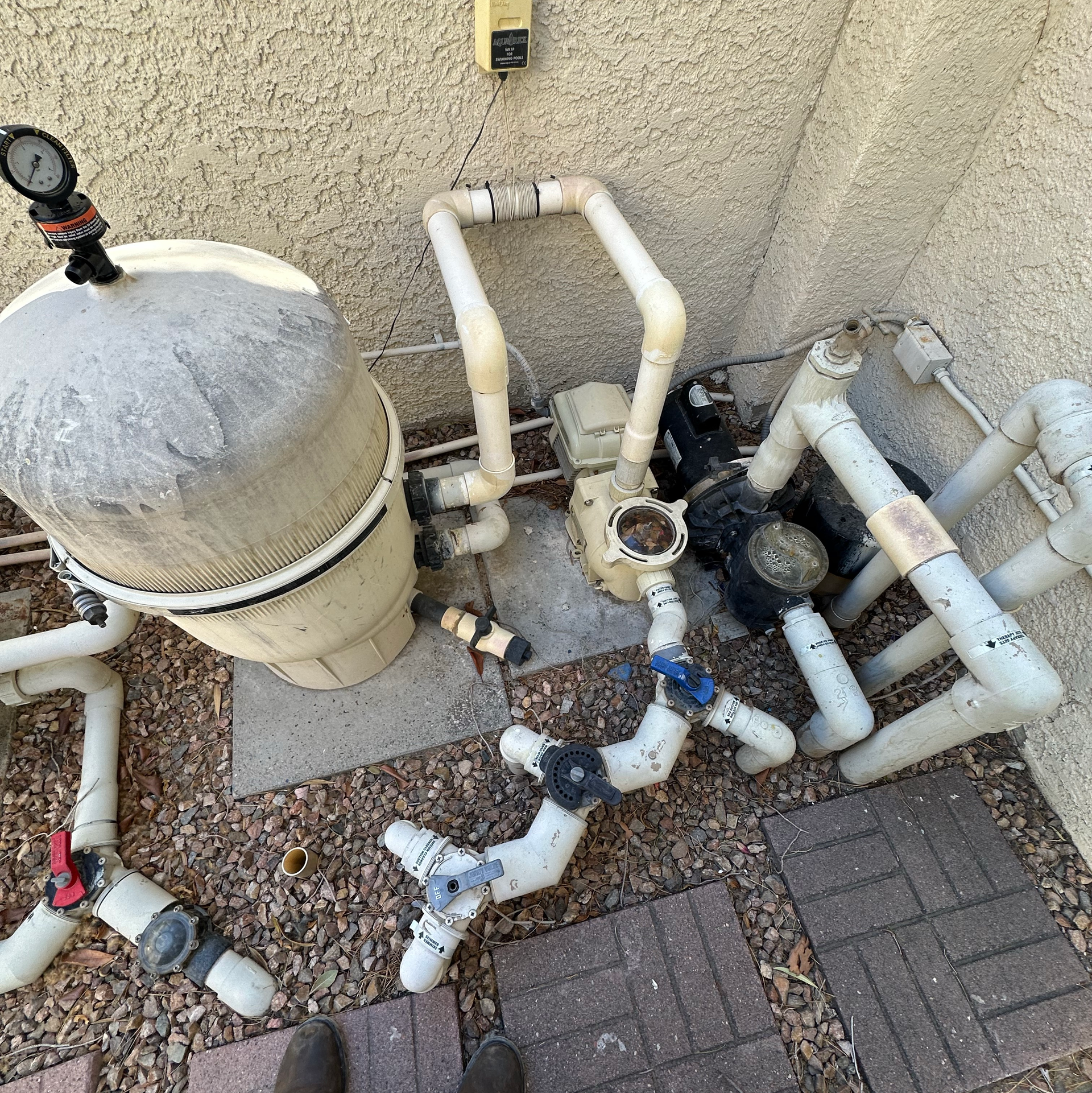
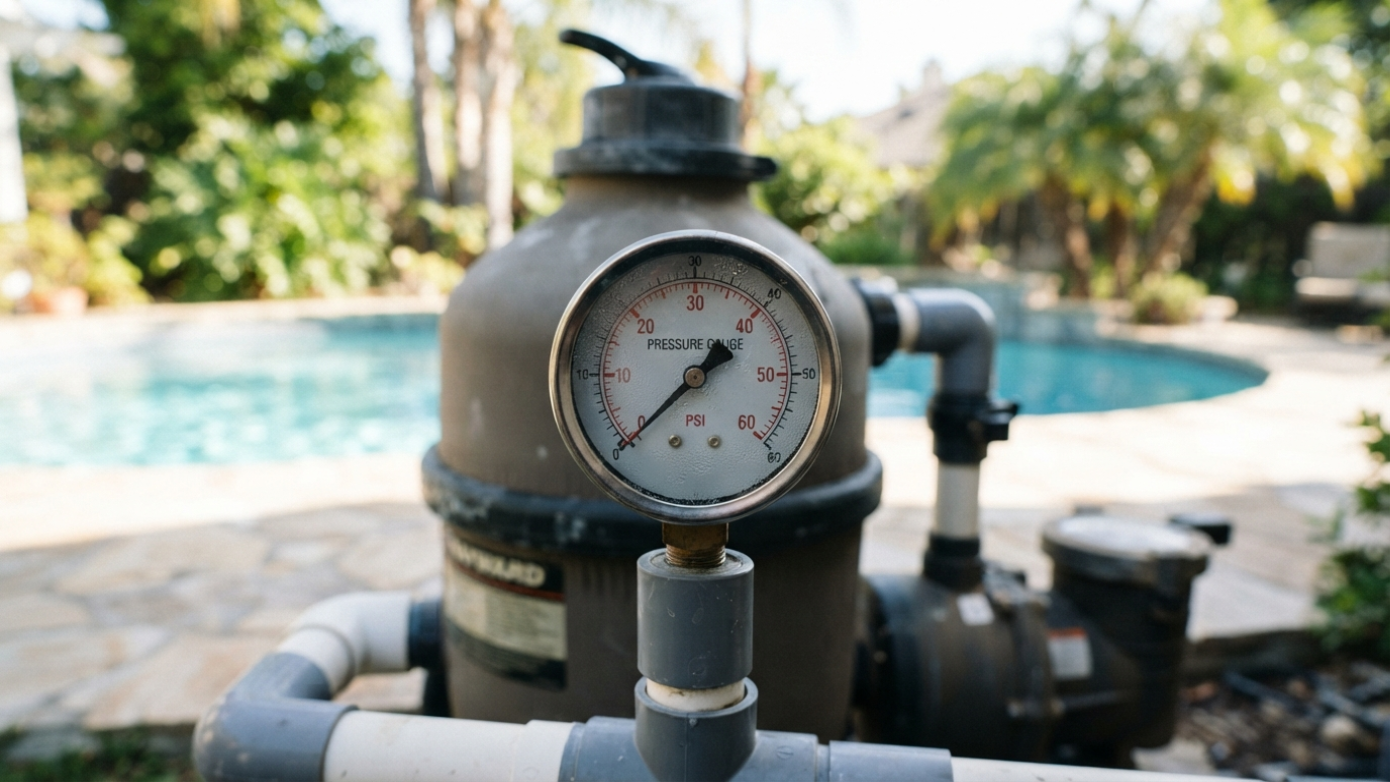
Every pool is different, so each inspection is tailored to the pool’s design and plumbing system. A typical inspection begins with a visual evaluation of the pool, equipment, plumbing, and visible structural components.
Our technicians also gather information about when the water loss occurs, whether it changes while the pump is running, and whether certain pool features appear to influence the problem. These observations help narrow down the possible causes before more detailed testing begins.
What Is an Isolation Test?
One of the most valuable diagnostic tools during a pool leak inspection is an isolation test.
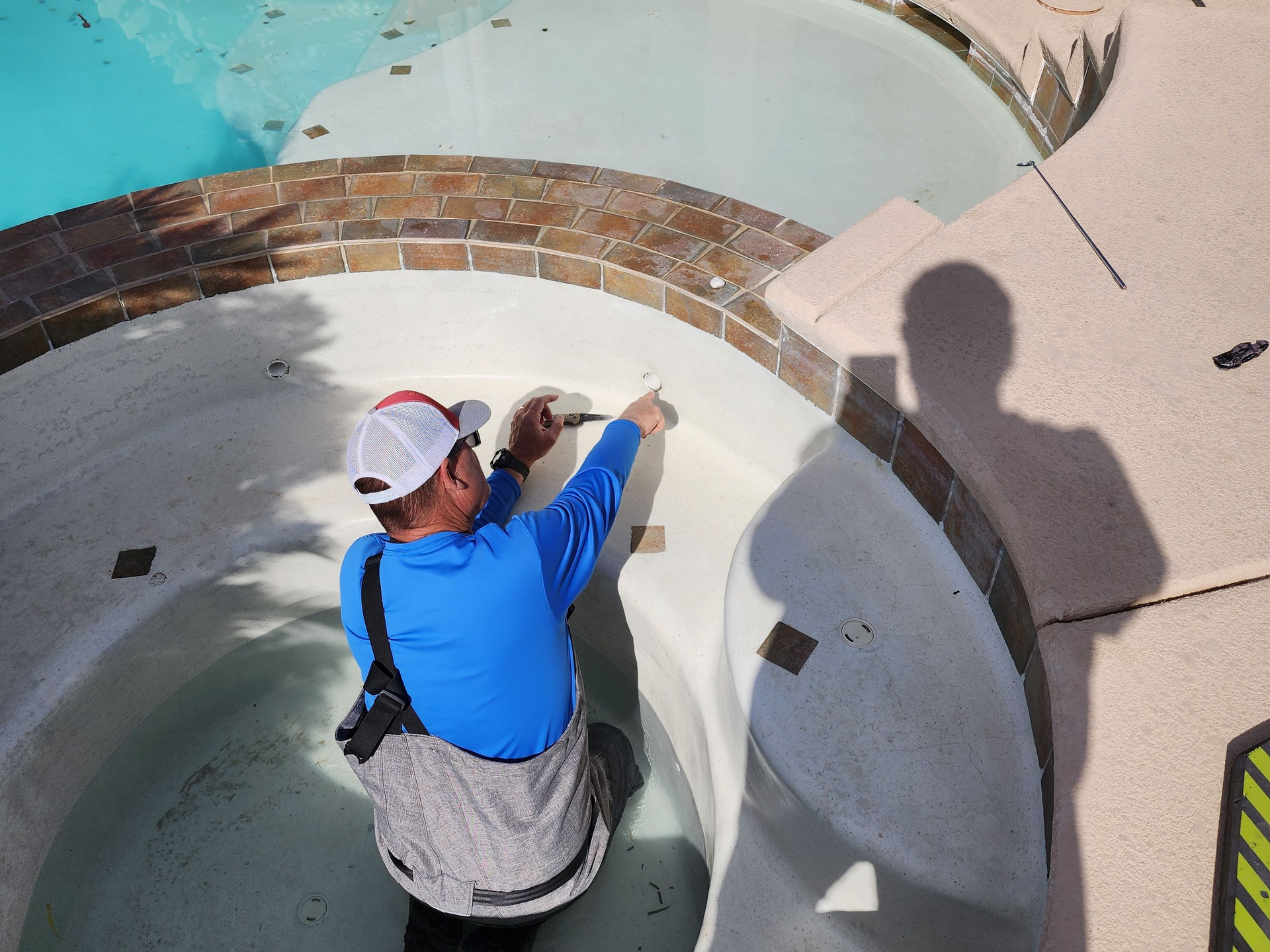
An isolation test is a method used to separate and evaluate specific plumbing lines, pool features, or connected bodies of water—such as a swimming pool and attached spa—to determine exactly where water loss is occurring.
By isolating individual sections of the plumbing system, technicians can determine whether the leak originates in a return line, suction line, water feature, spa, or another component of the pool system. Rather than guessing, the process systematically eliminates areas that are functioning properly and focuses attention on the section that is actually leaking.
This targeted approach often makes the repair process more efficient because it identifies the location of the problem before excavation or repairs begin.
What Is Dye Testing?
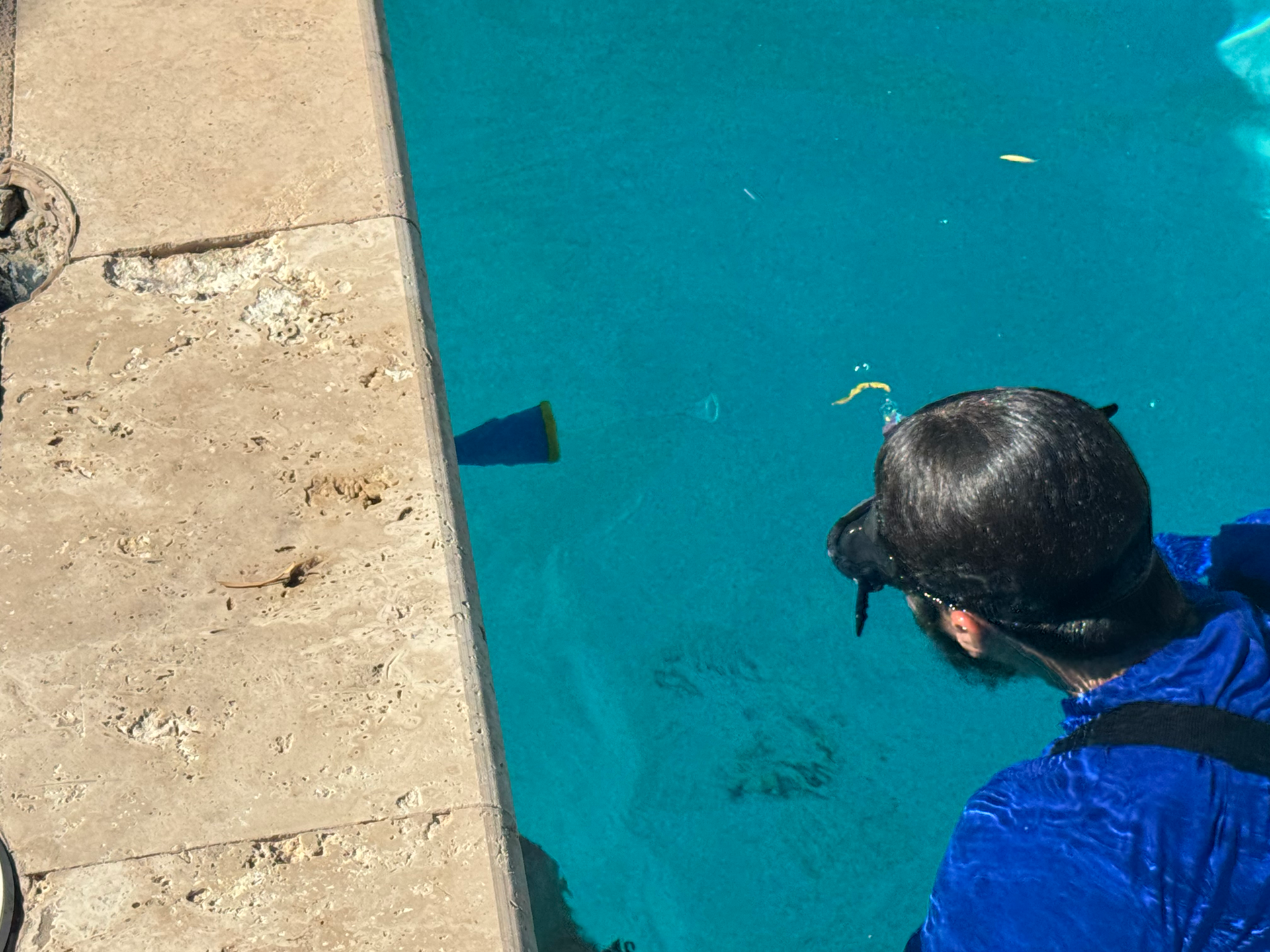
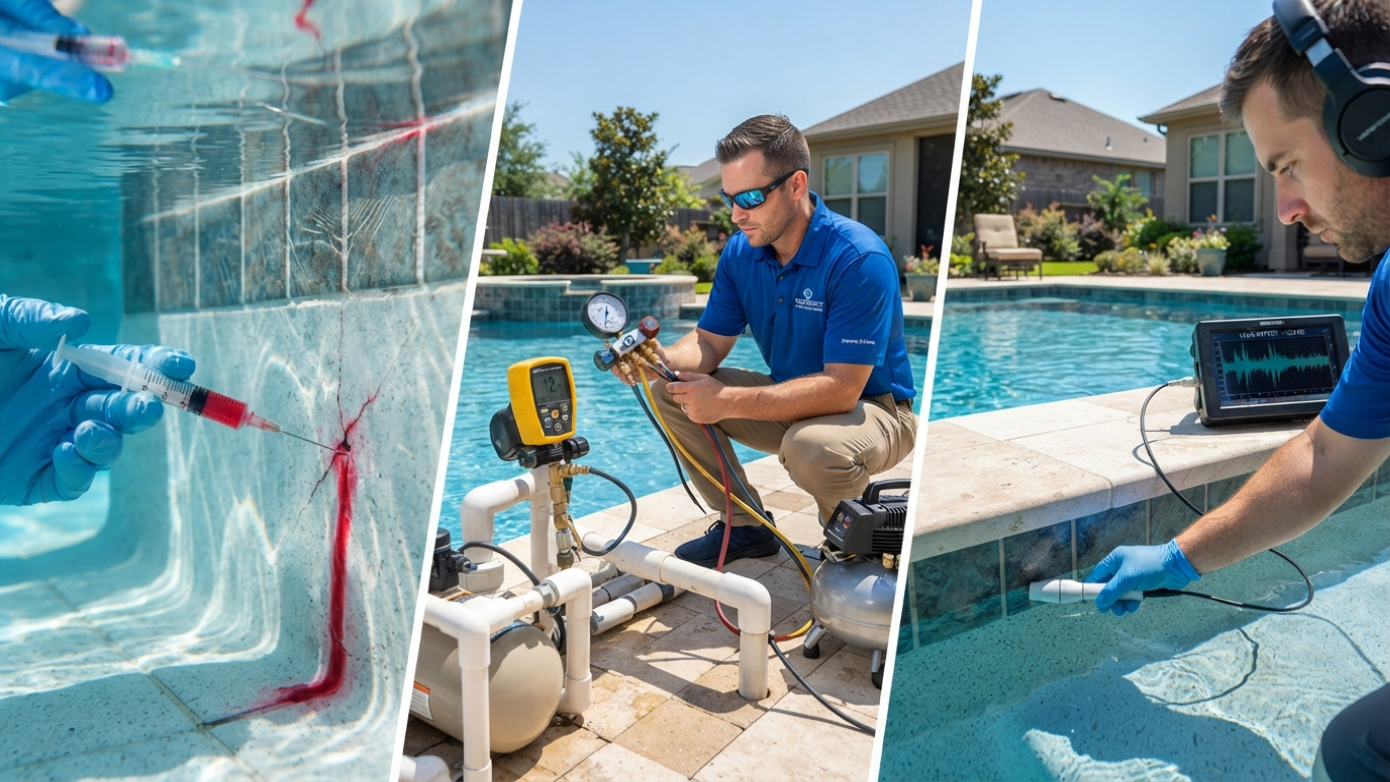
Once the general area of a suspected leak has been identified, dye testing is often used to locate the exact point where water is escaping.
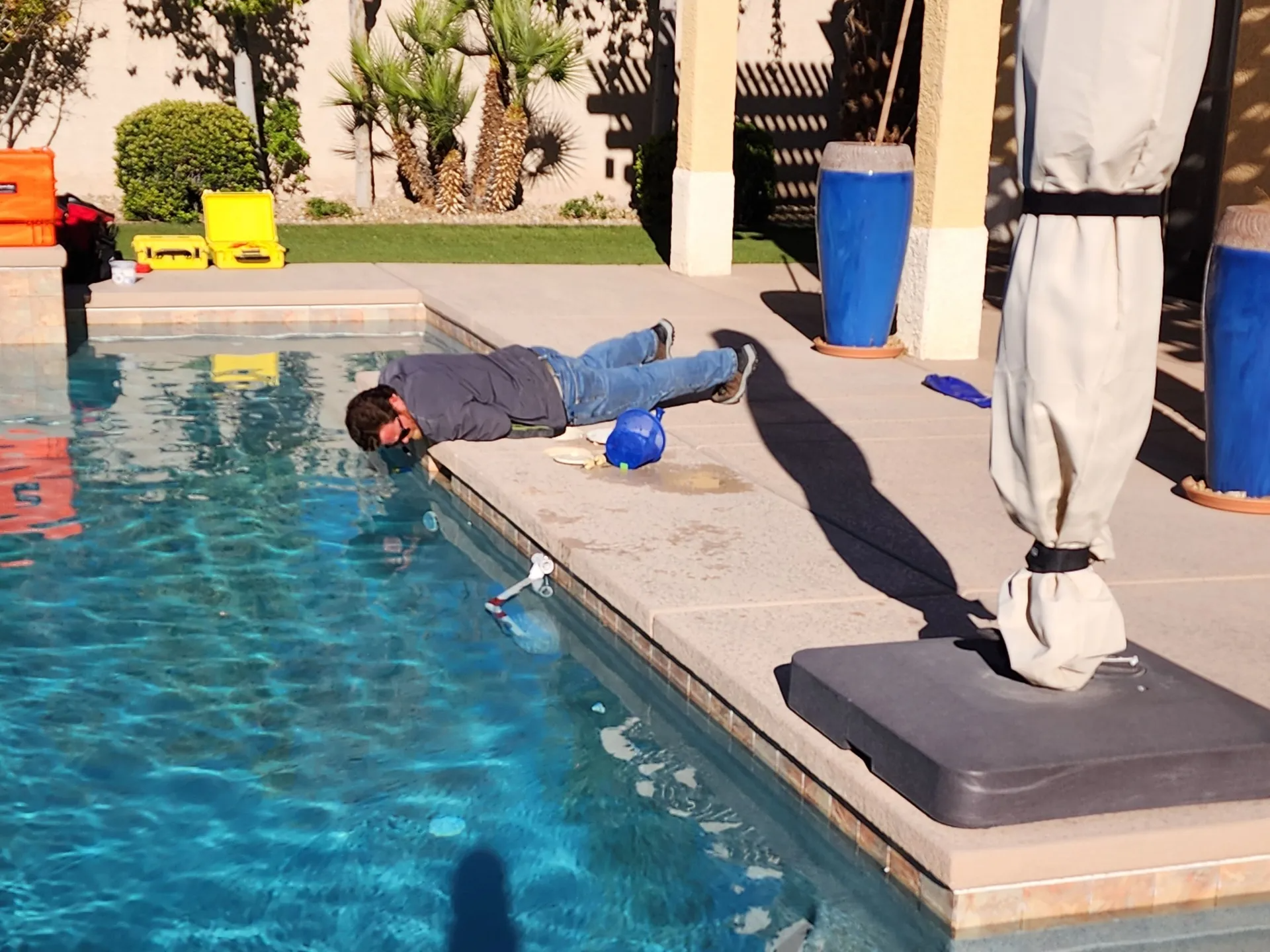
A specialized dye is carefully introduced near suspected cracks, fittings, skimmers, light niches, return fittings, and other potential leak locations while the water remains as still as possible.
If a leak is present, the dye is gently drawn toward the opening by the escaping water. This allows technicians to pinpoint small structural leaks that may not be visible during a standard visual inspection.
Because dye testing is precise and non-destructive, it is an important part of confirming the exact location of many pool leaks.
What Is the Leakalyzer?
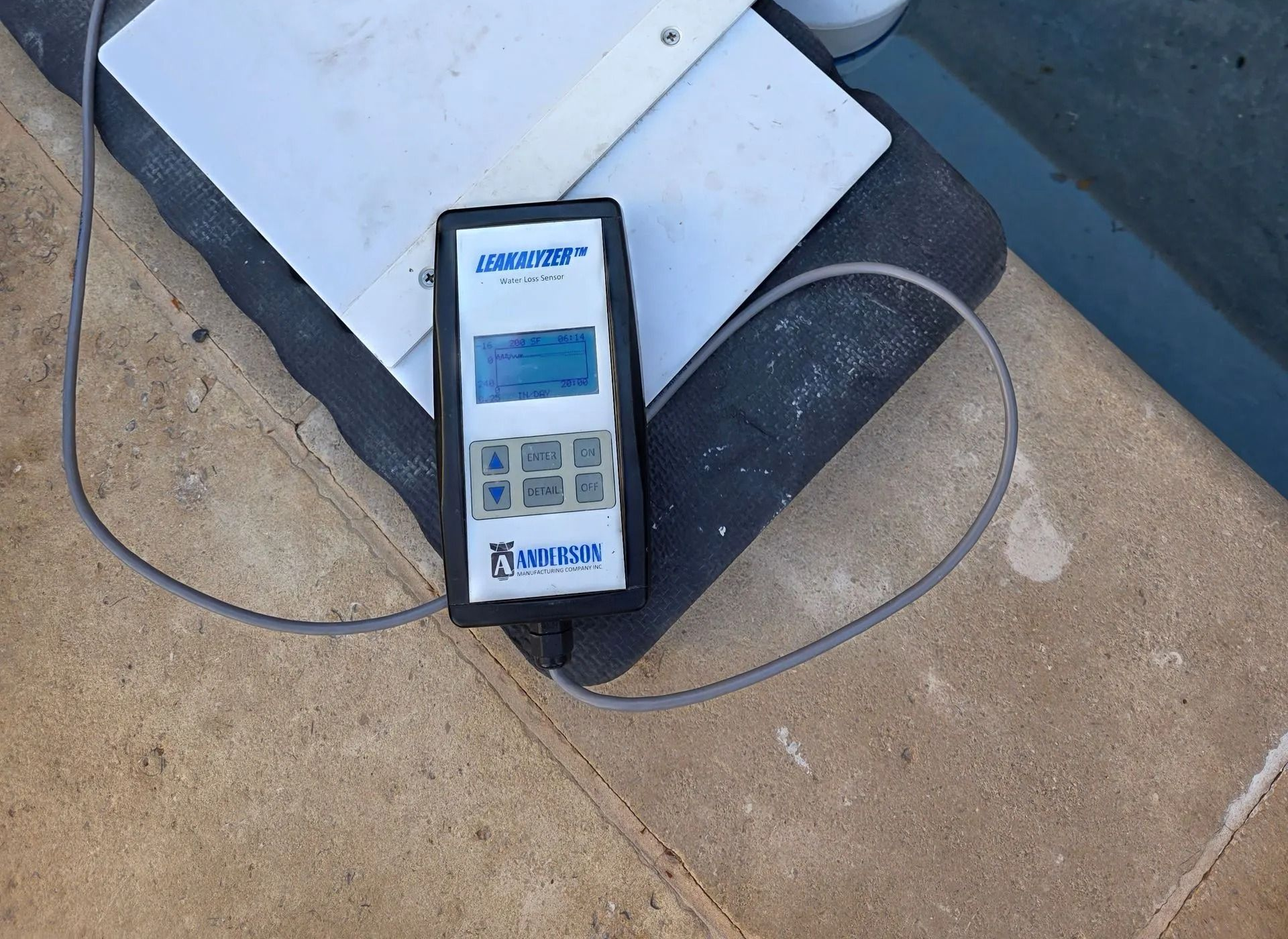
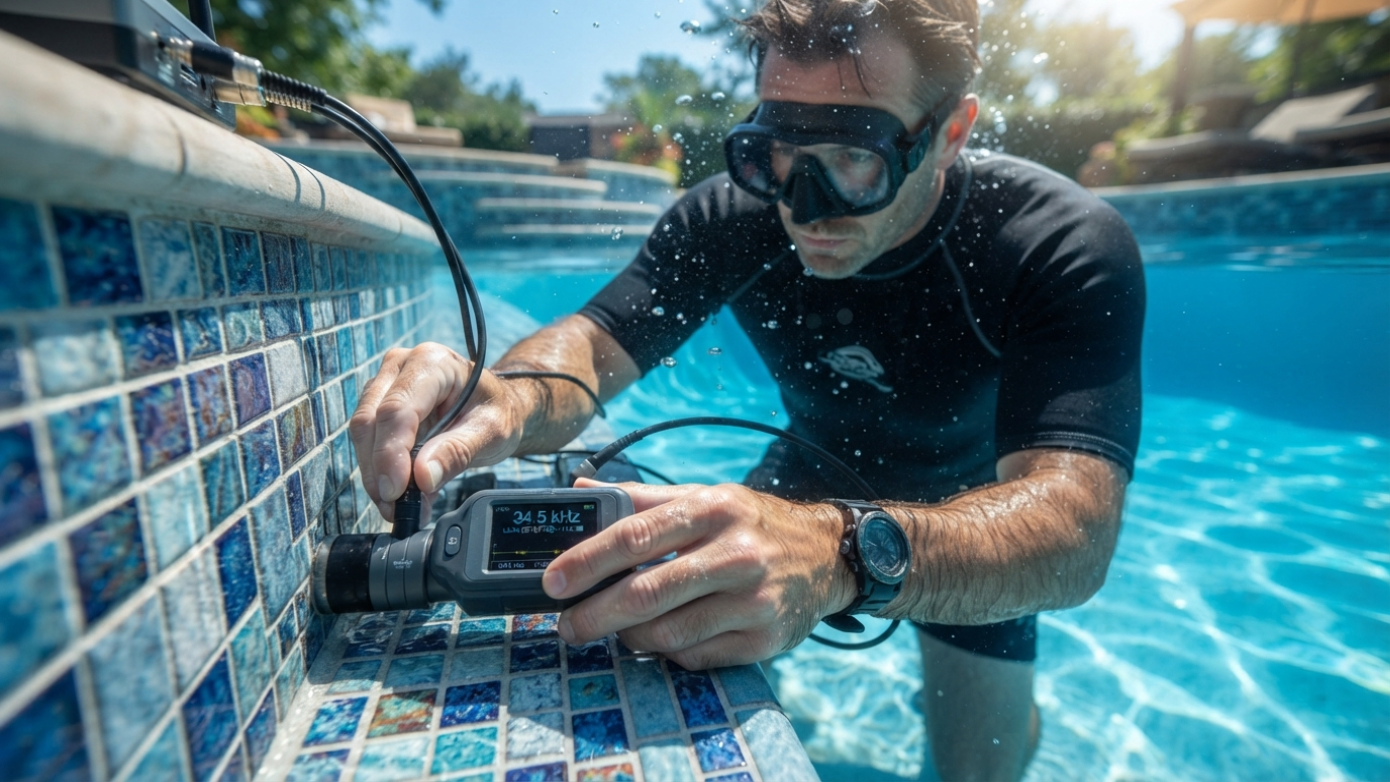
For many inspections, Hound Dog Leak Detection also uses advanced technology such as the Leakalyzer® Rapid Water Loss Sensor.
The Leakalyzer is an ultra-sensitive electronic instrument that measures tiny changes in the pool’s water level in real time. Rather than relying on a traditional bucket test that can take a day or longer, the Leakalyzer can often determine whether a pool is losing water—and estimate how much—in as little as five to ten minutes. It measures water level changes as small as one ten-thousandth of an inch and compares actual water loss to expected evaporation, producing a real-time graph that helps distinguish normal evaporation from a true leak.
This technology provides valuable information before more extensive leak-location procedures begin and can also help confirm that repairs have successfully resolved the problem.
Why Is Professional Leak Detection Worth It?
Pool leaks are not always obvious, and replacing parts without confirming the source of the problem can waste both time and money.
Professional leak detection uses a combination of visual inspections, isolation testing, dye testing, pressure testing when appropriate, and specialized diagnostic equipment to accurately identify the source of water loss. This allows repairs to focus on the actual problem instead of relying on trial and error.
Get Answers Before Water Loss Becomes a Bigger Problem
If your pool is losing water faster than expected, a professional inspection can provide the answers you need. Early detection not only helps conserve water but may also reduce the risk of more extensive damage and unnecessary repair costs.
At Hound Dog Leak Detection, we proudly serve homeowners throughout Las Vegas, Henderson, Summerlin, North Las Vegas, and the surrounding communities with accurate, professional pool leak detection services. Whether you’re responding to an unusually high water bill, a Southern Nevada Water Authority water usage alert, or simply suspect your pool has a leak, our experienced team is ready to help. Contact Hound Dog Leak Detection today to schedule a comprehensive pool leak inspection and protect your investment.